Museum of Grenoble, Art museum in Grenoble, France.
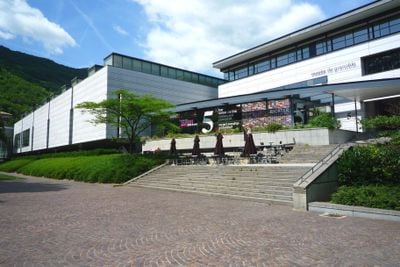
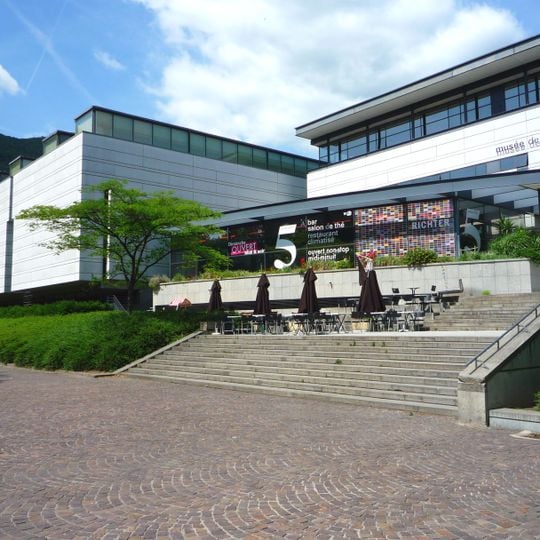
The Museum of Grenoble occupies a modern building of stacked blocks with grey panelled walls and a continuous band of windows beneath the flat roof. Inside, a round cream ceiling with recessed lights covers a hall where two white cylindrical columns support circular upper floors, and a curved staircase with a white railing rises to the left. The permanent collection fills 57 rooms and a sculpture garden, with two buildings on the site built nearly six centuries apart.
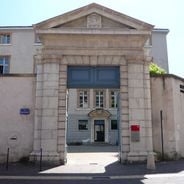
Founded by decree on 16 February 1798 at the request of drawing professor Louis-Joseph Jay, the museum opened on 31 December 1800 in the former bishopric with 298 works. It moved to the former Central School in 1802, then to a building by Charles-Auguste Questel in 1870. The current building, inaugurated on 30 January 1994, tripled the exhibition space.
The museum's name honours Louis-Joseph Jay, the drawing professor appointed its first curator in 1798, not a donor of a private collection. Its temporary exhibitions can draw over 100,000 visitors, and the museum has long been a centre of French artistic life.
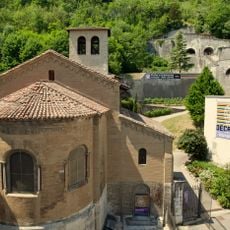
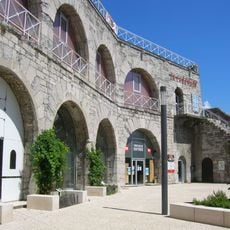
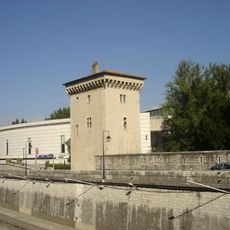
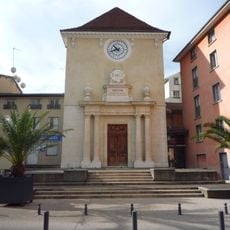
The museum stands on the left bank of the Isère, place Lavalette, a short walk from the city centre. The sculpture garden in the 16,000 m² Albert Michallon park surrounds the late 19th-century city wall. The building has two parts built nearly six centuries apart: the modern structure and the former Franciscan convent.
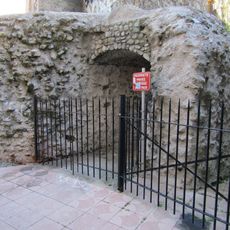
The museum's two buildings stand nearly six centuries apart: the modern structure opened in 1994 beside the fortified site of the former Franciscan convent, whose 13th-century origins and later Arsenal walls lie under the surrounding Albert Michallon park, a 16,000 m² wooded area.
The community of curious travelers
AroundUs brings together thousands of curated places, local tips, and hidden gems, enriched daily by 94,133 contributors worldwide.