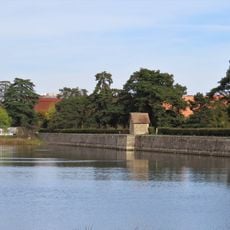
Forest of Rambouillet, National forest in Yvelines, France
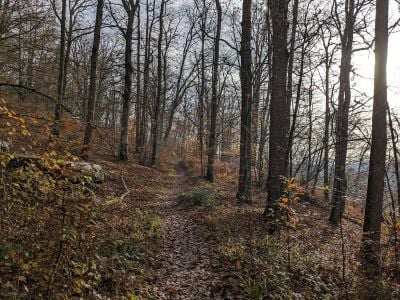
The Forest of Rambouillet, also called the forest of Yveline, is a 200 km² wooded massif in the Yvelines, of which 145.5 km² is state forest spread over 29 communes. Oaks make up 68% of the stand and pines (Scots and Corsican) 25%. Ponds, rocky areas, sand flats, valleys and waterfalls lie within it, and part of it belongs to the Haute Vallée de Chevreuse regional natural park.
The forest is a remnant of the ancient Yveline forest, which stretched from Paris to the Seine and included the woods of Laye, Fontainebleau, Orléans and Dreux. From the 16th to the 18th century it was gradually developed for royal hunting, when the star-shaped road network was laid out and the high forest planted. It is now the second most visited forest in Île-de-France after Fontainebleau.
The forest's name comes from the Latin Aequalina, recorded as Silva Aequalina in 615 and as Evelina around 825; scholars link it to a Gallic root for water, fitting a massif dotted with ponds and streams. The town of Rambouillet, which gave the forest its current name, lies on its southern edge.
Access to the woodland is open all year without charge, and marked trails guide visitors through varied landscapes from thick undergrowth to open clearings. Cyclists and riders share some routes, so awareness of others on the paths is helpful.
A group of Bennett's wallabies lives in the southern section, having escaped from a nearby zoo in the 1970s and settled since then. Their number is estimated at up to 150 animals, adapted to the temperate climate.
The community of curious travelers
AroundUs brings together thousands of curated places, local tips, and hidden gems, enriched daily by 93,178 contributors worldwide.