
Musée de l'Ancien Évêché
Musée de l'Ancien Évêché, Historical museum in central Grenoble, France.
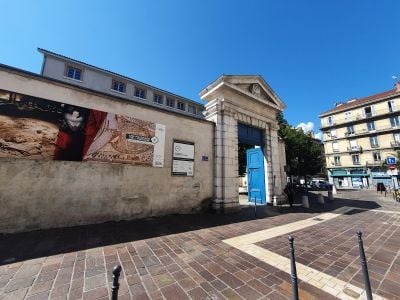
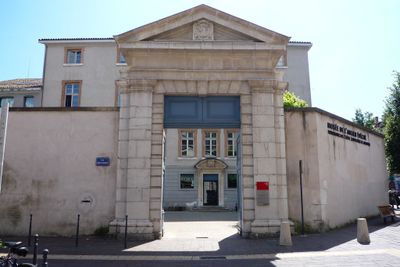
The Musée de l'Ancien Évêché is a history museum in central Grenoble housed in a remarkable building. The structure blends a medieval episcopal palace with modern elements of glass, steel, and concrete that connect different time periods together.
The building began as a bishop's palace in the 13th century and later served administrative purposes. Underground lies a baptistery from the 3rd or 4th century, revealing how long Christianity has been present at this location.
The museum displays regional objects and artworks that tell the story of the Isère over thousands of years. Visitors encounter everyday items alongside valuable pieces that reflect local identity and heritage.
The location is central and the building is easy to reach. Visitors should check opening times and allow time to explore both the basement areas and the contemporary exhibition spaces.
Inside is a painted ceiling from the 13th century showing scenes from a medieval romance story. These rare wall paintings are remnants of a reception hall and offer a glimpse into the artistic tastes of that era.
Location: Grenoble
Inception: 1998
Official opening: 1998
Accessibility: Wheelchair accessible
Operator: Département de l'Isère
Address: 2 Rue Très Cloîtres, 38000 Grenoble, France
Opening Hours: Monday-Friday 09:00-18:00; Wednesday 13:00-18:00; Saturday,Sunday 11:00-18:00; January 01,May 01,December 25 off
Phone: +33476031525
Website: https://musees.isere.fr/musee/musee-de-lancien-eveche
GPS coordinates: 45.19283,5.73165
Latest update: December 6, 2025 17:42
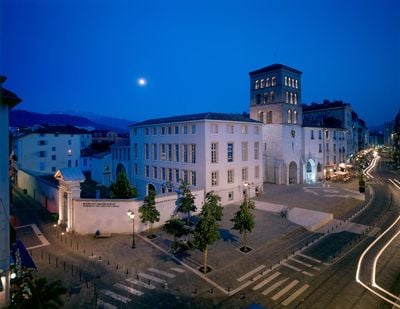
Grenoble displays architectural developments from the medieval period to the present day. The medieval Notre-Dame Cathedral stands in the historic center, while the Art Museum offers modern exhibition spaces. The city includes the Tour Perret, a cylindrical tower building from the 1920s, and the...
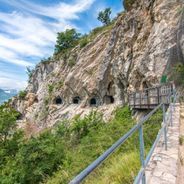
Grenoble sits in the Isère River valley, surrounded by three mountain ranges in the French Alps. The city combines alpine landscape with urban infrastructure and serves as a base for exploring the surrounding mountain regions. The Fort de la Bastille, accessible via a historic cable car, provides...
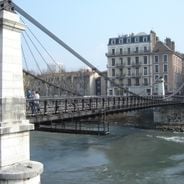
Grenoble offers many places to photograph, from the Saint-Laurent Bridge crossing the Isère River to the Bastille fortress rising 476 meters above the city. The old town reveals itself through narrow streets in the Saint-Laurent district lined with stone buildings, surrounded by squares like Place...

Museum of Grenoble
195 m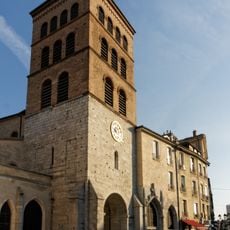
Grenoble Cathedral
58 m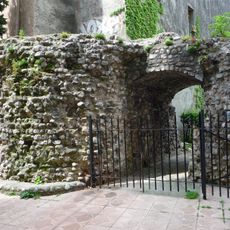
Cularo
282 m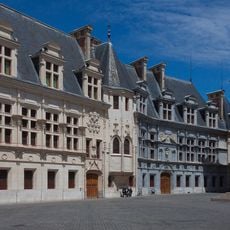
Palais du parlement du Dauphiné
253 m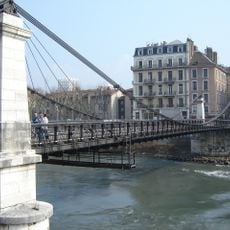
Passerelle Saint Laurent
246 m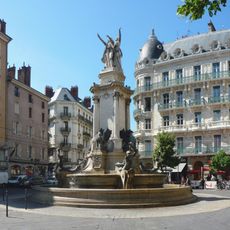
Fountain of the three orders, Grenoble
66 m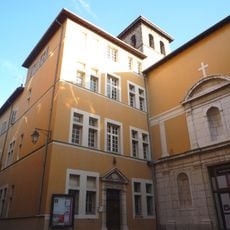
Couvent des Minimes de Grenoble
143 m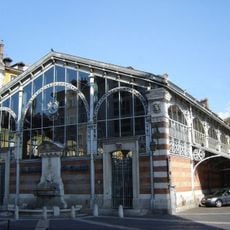
Halle Sainte-Claire
236 m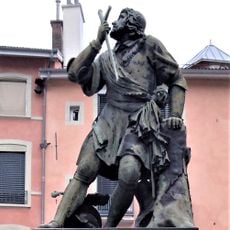
Statue of Bayard in Grenoble
249 m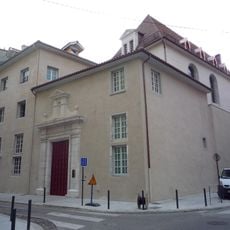
Couvent Sainte-Cécile de Grenoble
245 m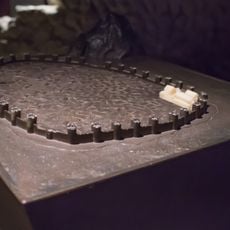
Vestiges of the Gallo-Roman wall, Grenoble
35 m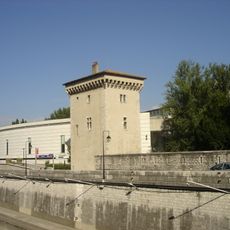
Tour de l'Isle
253 m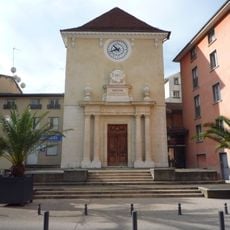
Chapelle Sainte-Marie-d'en-Bas
185 m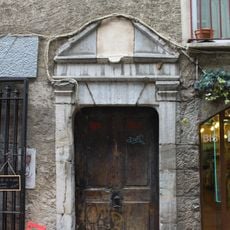
Birthplace of Stendhal
268 m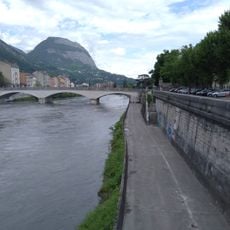
Citadel bridge
279 m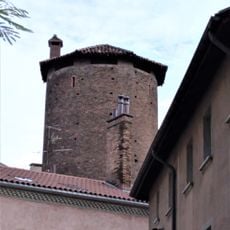
Tour de Sassenage
123 m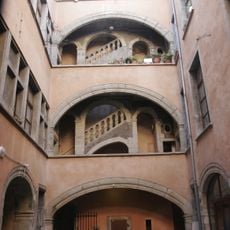
Hôtel d'Ornacieux
80 m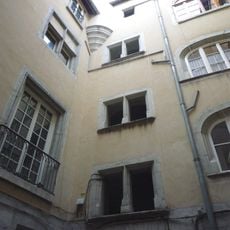
Hôtel de François Marc
122 m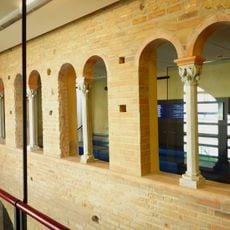
Ancien évêché de Grenoble
44 m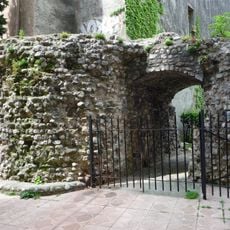
Ramparts of Grenoble
282 m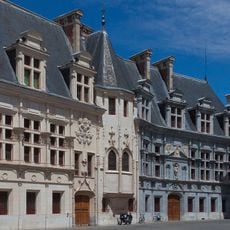
Chapelle des dauphins
247 m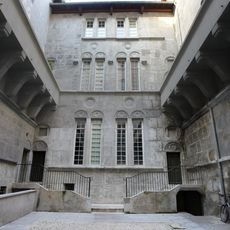
Hôtel Pierre Bucher
51 m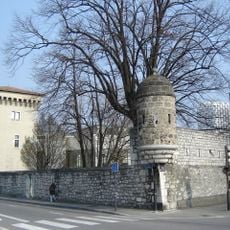
Caserne Vinoy
228 m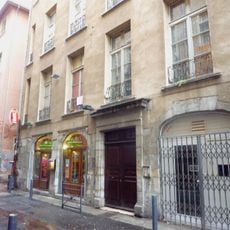
Immeuble, 14 rue Chenoise
99 m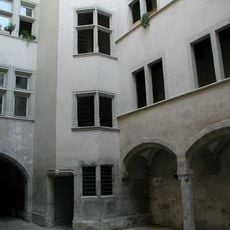
Hôtel 10 rue Chenoise
99 m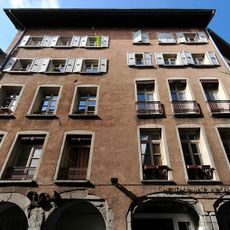
Immeuble, 9 rue Chenoise
93 m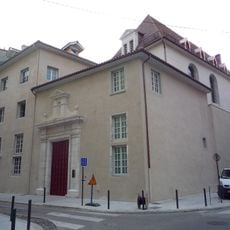
Chapelle du couvent Sainte-Cécile de Grenoble
238 m
Hôtel du Bouchage
237 mVisited this place? Tap the stars to rate it and share your experience / photos with the community! Try now! You can cancel it anytime.
Discover hidden gems everywhere you go!
From secret cafés to breathtaking viewpoints, skip the crowded tourist spots and find places that match your style. Our app makes it easy with voice search, smart filtering, route optimization, and insider tips from travelers worldwide. Download now for the complete mobile experience.

A unique approach to discovering new places❞
— Le Figaro
All the places worth exploring❞
— France Info
A tailor-made excursion in just a few clicks❞
— 20 Minutes