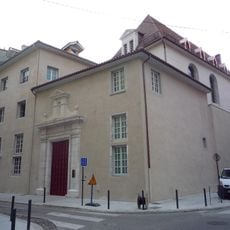
Natural History Museum of Grenoble, Natural history museum in Grenoble, France.
The Natural History Museum of Grenoble is located within the Jardin des Plantes and displays collections of minerals, fossils, insects, and birds. The exhibition space presents these materials across several galleries dedicated to different aspects of natural science.
The collection began in 1775 as a natural history cabinet attached to Grenoble's public library in the former Jesuit college, formed from the cabinets of Father Étienne Ducros, Intendant Pajot de Marcheval and the Abbey of Saint-Antoine. It became municipal in 1814. In 1845 the city decided to build a new museum, whose first stone was laid in 1849; it opened in 1855 in the Jardin des Plantes.
The museum's name changed from Cabinet to Muséum in 1845, when the mayor Frédéric Taulier decided to enlarge the collection. Since 1980 the association Les Amis du Muséum supports its activities, and the museum receives around 80,000 visitors a year.
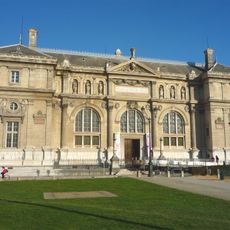
The museum stands on the edge of the Jardin des Plantes, on rue Dolomieu; the park facade with its Échaillon stone colonnade faces the garden. The long first-floor gallery is reached by stairs, and the mezzanine above it looks down on the display cases. The building's facades and roofs facing the garden have been listed as monuments historiques since 24 January 1944.
The 1855 building was designed by municipal architect Paul Benoît Barillon in the Tuscan order, with a stone colonnade of pierre de l'Échaillon facing the park. In 1871 the sculptor Charles Aimé Irvoy added sixteen terracotta medallions to the long first-floor gallery, portraying scientists from Aristotle to Coenraad Jacob Temminck, including Dominique Villars and Alexander von Humboldt.
The community of curious travelers
AroundUs brings together thousands of curated places, local tips, and hidden gems, enriched daily by 93,776 contributors worldwide.