Villa Angiolina, Renaissance Revival villa in Opatija, Croatia.
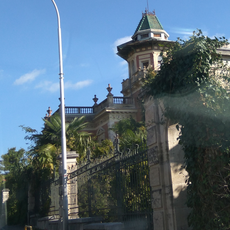
Villa Angiolina is a symmetrical Palladian-style villa with a monumental staircase facing the sea, built in a late Biedermeier form with Neo-Renaissance vocabulary. Its ground floor is decorated with stucco friezes and garlands, Neo-Corinthian columns, and illusionistic paintings of animals and plants. A flower rotunda sits in the park before the seaward facade.
Iginio Scarpa, a Rijeka timber and wheat merchant, bought the plot for 700 gulden and had the villa built in 1844 or 1845, naming it after his wife Angiolina Sartorio, who died in 1832 aged 30. His son Paolo hosted Ban Josip Jelačić in 1850; after a business failure Paolo sold the house in 1875 to Viktor von Chorinsky, and in 1882 the Südbahngesellschaft turned it into a luxury pension.
The building now houses the Croatian Museum of Tourism, showing how travel shaped this coastal region. Inside, exhibitions display objects that tell the story of how people began visiting these shores.
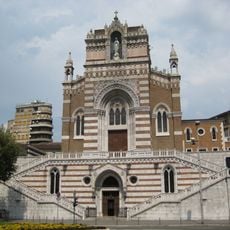
The villa stands at the end of Opatija's main coastal promenade, with the park and its flower rotunda on the seaward side and the church of St. Jakob in the neighbouring park. The ground floor holds the Croatian Museum of Tourism, with the restored Madonna del Mare in the rear salon and a permanent exhibition on the upper floor. The park is the town's central green space and is crossed by walking paths.
The surrounding park holds around 159 plant species from different continents, creating a botanically notable setting. The Japanese camellia growing there became the symbol of the town.
The community of curious travelers
AroundUs brings together thousands of curated places, local tips, and hidden gems, enriched daily by 92,779 contributors worldwide.