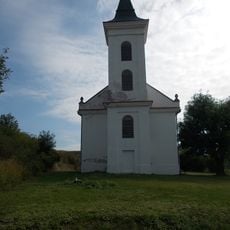
Zone de protection paysagère du Sárrét, Landscape park in Fejér County, Hungary.
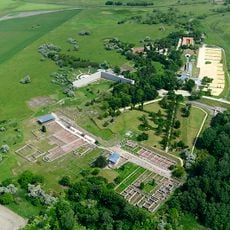
The Sárrét landscape park covers 2,211 hectares between Várpalota and Székesfehérvár, in the administrative areas of Csór, Sárkeszi and Sárszentmihály. It lies in a Pleistocene basin whose more than ten-metre-thick peat layer, formed over calcareous mud, recalls a former marshland. Today most of the area is dry, with small patches of protected fen meadows and sandy steppe grasslands among farmland.
The basin formed in the Pleistocene as the northern edge of a marshland reaching the Tolna hills, and its calcareous mud layer over ten metres thick is the most important occurrence of this sediment in Hungary. The 19th-century water regulations drained most of the marsh, leaving dry meadows, saline grasslands and farmland. The area, 2,211 hectares with 422 under strict protection, is managed by the Duna-Ipoly National Park Directorate.
Sárpentelén, a hamlet on the edge of the Sárrét, was the childhood home of Count Zsigmond Széchenyi, the hunter and writer known for his books on hunting in Africa and Asia. Part of the park around his former manor survives as the Pentele forest, now a popular walking spot, and a memorial stone and memorial room honour him at the site of his first hunting experiences.
The protected area lies between Várpalota and Székesfehérvár, on the land of Csór, Sárkeszi and Sárszentmihály, and is managed by the Duna–Ipoly National Park. Most of it is dry farmland and steppe, with the valuable marsh meadows surviving only as small patches, so plan your route around those fragments.
The reserve was originally protected above all for its great bustards, of which at most a few remain on the dry meadows. Nearly sixty bird species have confirmed nesting here, including the pallid harrier, red-footed falcon, barn owl and the rare great snipe on the marshy parts.
The community of curious travelers
AroundUs brings together thousands of curated places, local tips, and hidden gems, enriched daily by 93,276 contributors worldwide.