Volt Sertésvágóhíd, Historical slaughterhouse in Budapest District IX, Hungary
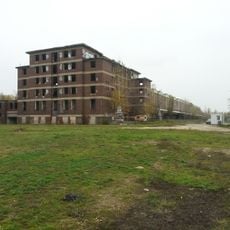
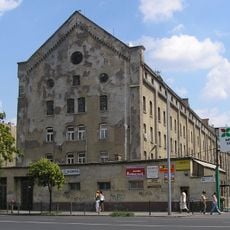
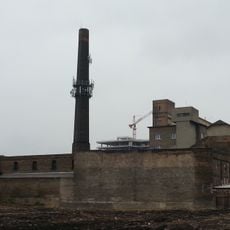
The Volt Sertésvágóhíd is a former slaughterhouse from the industrial era in Budapest's District IX. The building displays the solid construction typical of that period, with sturdy materials and practical forms designed for factory operations.
Plans for a pig slaughterhouse south of the Összekötő railway line were drawn up in 1895, and the complex between today's Külső Mester utca and Gubacsi út was built from 1897 to 1902. It opened on 1 May 1902, designed by city engineer Mihályik István and built by Kubinyi Imre. At its peak it slaughtered an average of 5,000 pigs a day. After the regime change the plant was wound up, and most buildings were demolished in 2001.
The building shows how production facilities once stood at the heart of the city and shaped daily urban life. It reminds visitors of an era when factories and slaughterhouses were as much a part of the city as offices or shops are today.
The building is located in the southeastern part of the district and is visible from outside, as the original exterior has been preserved. Visitors can view the facade and appreciate the industrial architecture from various angles around the structure.
Most of the complex was demolished in 2001, but three structures survived: an old office building on Gubacsi út, the ornate early-20th-century water tower under monument protection, and the hall completed in 1932. The cleared site stayed empty, and part of it now serves as a bus parking area for Volánbusz.
The community of curious travelers
AroundUs brings together thousands of curated places, local tips, and hidden gems, enriched daily by 92,651 contributors worldwide.