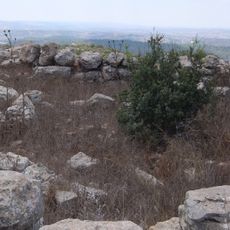
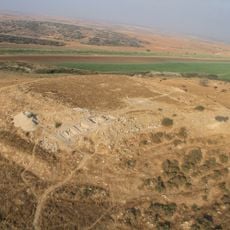
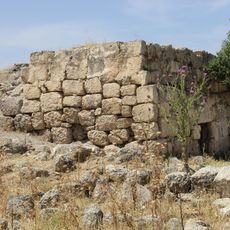
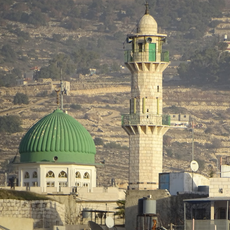
Hurvat Itri, Archaeological site in Judean Lowlands, Israel.
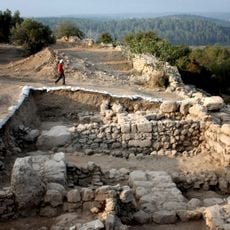
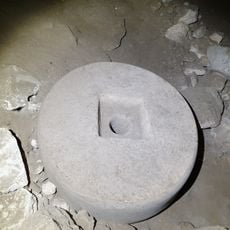
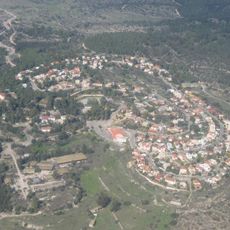
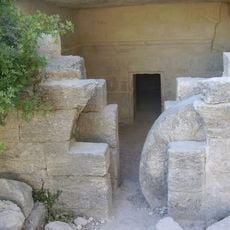
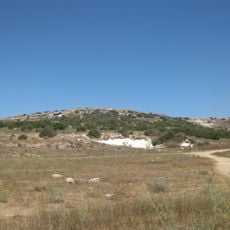
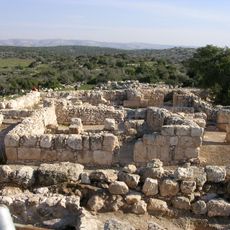
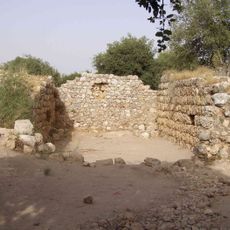
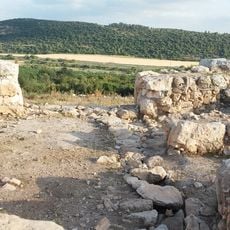
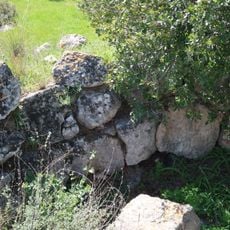
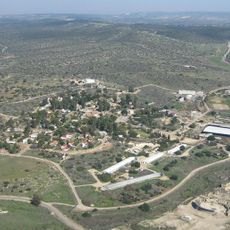
Hurvat Itri is a partially restored Jewish village on a 406-metre hill in the Judean Lowlands, occupied from the late Persian period until its destruction in the Bar Kokhba revolt. Its eastern quarter holds a large public building that may be the only known synagogue from the period between the revolts, next to a mikveh and a hideout system. Four ritual baths, rock-cut wine presses and a columbarium for doves survive among the houses.
The village was damaged and briefly abandoned during the First Jewish-Roman War; it is identified with Caphethra, which Josephus says was destroyed by Legio V Macedonica in 69 CE. Jews resettled the smaller village between the revolts and built a public structure, possibly a synagogue. It was destroyed during the Bar Kokhba revolt of 132-136 CE, leaving a destruction layer and a mass grave of about fifteen people in a mikveh, one possibly beheaded.
The ritual baths and synagogue foundation show how closely religious life was woven into everyday routines in this village. Walking through the site, visitors can see how homes and gathering spaces stood side by side.
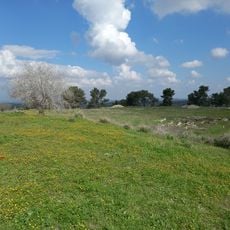
The site lies southwest of Jerusalem inside a designated park and has marked walking paths between the excavated areas. Sturdy footwear is a good idea, as the ground can be uneven in places.
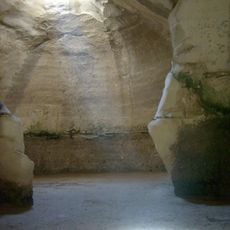
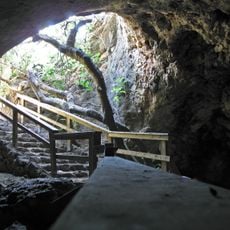
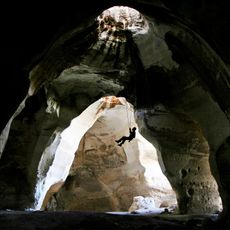
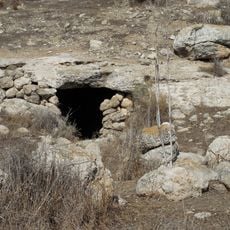
Beneath the village lies a network of underground refuge chambers that residents cut into the rock, with some rooms untouched since ancient times. These hidden spaces offer a direct look at how people here prepared for danger.
The community of curious travelers
AroundUs brings together thousands of curated places, local tips, and hidden gems, enriched daily by 94,465 contributors worldwide.