Chorazin, Archaeological site in Northern District, Israel
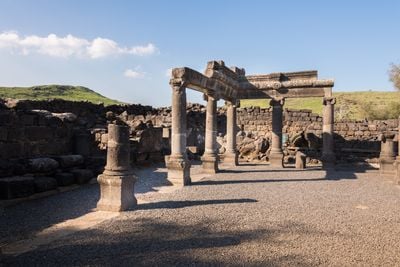
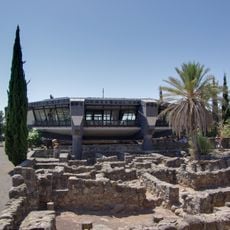
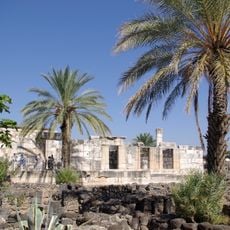
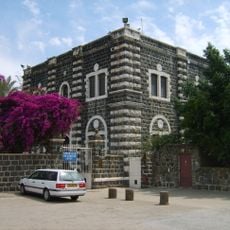
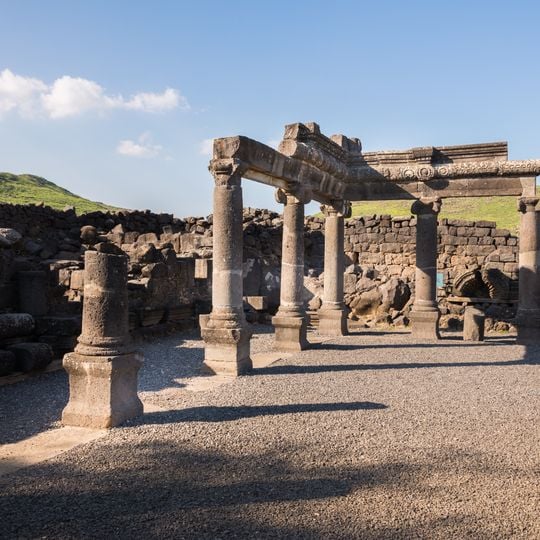
Chorazin is an archaeological site and national park on the Korazim Plateau in the Northern District of Israel. Its ruins, built mostly of local black basalt, cover 25 acres divided into five quarters around a central synagogue. The synagogue's remains include columns with carved bases and capitals supporting a horizontal beam, and a ruined wall of dark stones stands nearby.
Chorazin flourished in the late 3rd and early 4th centuries CE, when most of its basalt buildings and its synagogue were erected. The synagogue was destroyed in the 4th century, possibly by an earthquake, and rebuilt in the 6th century. The site was later occupied by the village of Khirbat Karraza, whose Bedouin residents of the Zangariyye tribe kept grain beside the shrine of Shaykh Ramadan. Excavations began in 1905 and resumed in the 1920s.
The remains of ritual baths, olive presses, and decorated stone items provide evidence of daily Jewish life during the Roman and Byzantine periods. These finds reveal craftsmanship and religious practices that visitors can observe today at the excavated locations.
The national park opens daily in the early morning and closes in the late afternoon, with guided visits available in several languages. The terrain requires sturdy footwear and offers shaded areas for rest during exploration.
Archaeologists discovered a rare stone carving of Medusa within the synagogue, pointing to artistic exchange between Jewish communities and the Greco-Roman world. This unusual motif appears in this sacred space despite religious restrictions against idolatry.
The community of curious travelers
AroundUs brings together thousands of curated places, local tips, and hidden gems, enriched daily by 93,317 contributors worldwide.