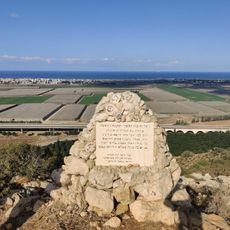
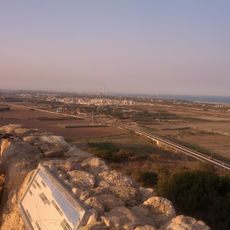
Tel Taninim, Archaeological tell near Jisr az-Zarka, Israel.
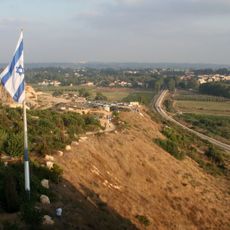
Tel Taninim is an archaeological mound on the Mediterranean shore near the mouth of Nahal Tanninim, south of Jisr az-Zarka. Its weathered stone and rubble walls, with an uneven top edge and a jagged peak near the centre, stand above dense green shrubs. The site preserves remains of a Crusader tower, a pool and a low aqueduct.
Phoenicians founded the settlement in the Persian period (475–332 BCE), and it continued through the Hellenistic era as Krokodeilon polis until about 100 BCE. The site lay largely abandoned in the Roman period, was resettled in the 4th century, and flourished in the Byzantine period as Migdal Malhā, the northernmost settlement of Caesarea's municipal area. After the Sasanian invasion of 614 and the Muslim conquest, a diminished village survived until the late 7th or early 8th century; the site was resettled only in the 12th century, when Crusaders built Turris Salinarum, destroyed by Baibars in 1265.
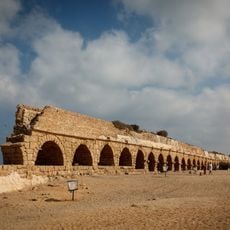
The site contains remnants of ancient fish breeding pools and a fourth-century aqueduct that reveal how past communities engineered water systems for daily use.
The excavation site is accessible through the town of Jisr az-Zarka and allows visitors to see multiple historical layers exposed in the ground. The terrain requires solid footing and protection from sun exposure during your visit.
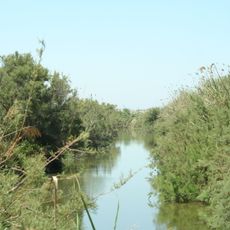
The place name comes from Nile crocodiles that lived in the nearby Kabbara swamps before they vanished in the early 1900s. This connection to these ancient reptiles adds an unexpected chapter to the location's story.
The community of curious travelers
AroundUs brings together thousands of curated places, local tips, and hidden gems, enriched daily by 93,128 contributors worldwide.