Amram Columns, Natural sandstone pillars in Southern District, Israel
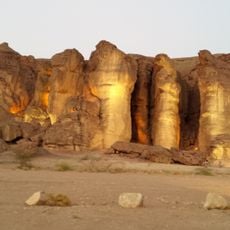
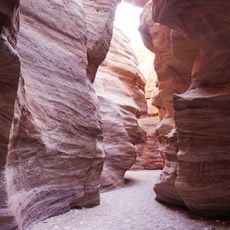
The Amram Columns are natural sandstone formations in southern Israel rising at the base of a western cliff beside Nahal Amram. These five distinct structures emerged through natural geological processes and shape the appearance of the surrounding desert landscape.
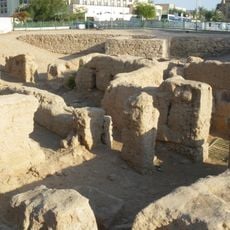
The copper mined at Nahal Amram, where the columns stand, is thought by researchers to have supplied the Chalcolithic copper industry centred on the villages of Tel Hujayrat al-Ghuzlan and Tel Magass. Remains of structures, niches and caves cut by copper mining survive in the wadi around the columns.
The Hebrew name comes from the Arabic Wadi 'Amrani, "the valley with the structures", a reference to the old buildings and mine workings in the wadi. The hill beside the columns is called Giv'at Yocheved, after Amram's wife and Moses' mother.
Reach the columns by car along the Nahal Amram road, which runs between Giv'at Bahat to the north and Har Amir to the south, up to a car park; from there it is a walk of a few minutes. Coming from the Israel National Trail requires a detour of about 2 km in each direction. The site lies in the Massiv Eilat nature reserve.
The Arabic name of the wadi, Wadi Amrani, means "the valley with the structures", referring to the remains of buildings tied to ancient copper mining in the valley. Researchers suggest copper from Nahal Amram fed the Chalcolithic industry at Tel Hujayrat al-Ghuzlan and Tel Magass.
The community of curious travelers
AroundUs brings together thousands of curated places, local tips, and hidden gems, enriched daily by 92,638 contributors worldwide.