Chaukhandi Stupa, Buddhist stupa in Sarnath, India
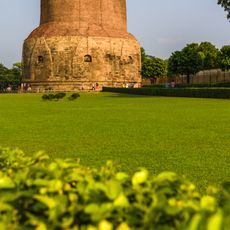
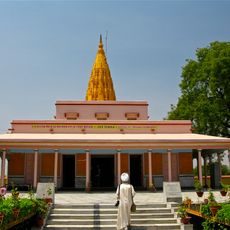
Chaukhandi Stupa is a brick structure in Sarnath with a rectangular base that rises in stepped levels toward an octagonal tower at the top. The entire building shows layers of construction stacked together, creating a shape that tapers upward like a pyramid.
The stupa was originally built as a terraced temple in the 7th or 8th century, marking the spot where Buddha met his first disciples travelling from Bodh Gaya to Sarnath. Govardhan, son of Raja Todar Mal, later gave it its present form by adding the octagonal tower to commemorate the visit of the Mughal emperor Humayun. The Hindi account instead traces the original stupa to Emperor Ashoka, enlarged during the Gupta period, and notes the Chinese pilgrim Xuanzang described it.
The name Chaukhandi comes from the square, chair-shaped base with three stepped brick tiers, as described by the Chinese pilgrim Xuanzang. The octagonal tower on top was added by Govardhan, son of Raja Todar Mal, to mark Humayun's visit. The site is maintained by the Archaeological Survey of India and was declared a monument of national importance in June 2019.
You can reach this site from Varanasi using local transport and then walk the final distance on foot. It helps to arrive early in the morning when the grounds are less crowded and the weather is more comfortable.
The octagonal tower was added by Govardhan, son of Raja Todar Mal, to mark Humayun's visit, not Akbar's. The Chinese pilgrim Xuanzang described the stupa in his writings, and the Archaeological Survey of India declared the site a monument of national importance in June 2019.
The community of curious travelers
AroundUs brings together thousands of curated places, local tips, and hidden gems, enriched daily by 92,872 contributors worldwide.