Ram Setu, Natural limestone chain between Rameswaram Island and Mannar Island, India and Sri Lanka
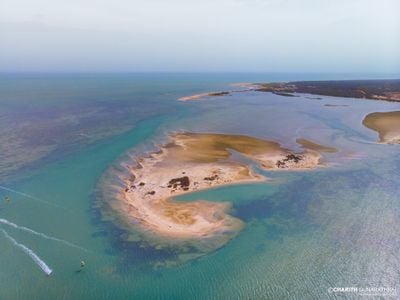
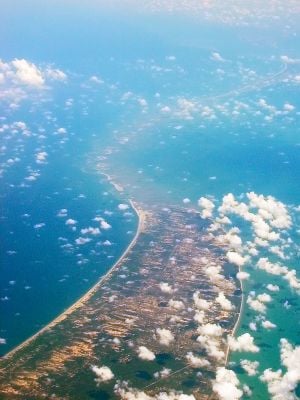
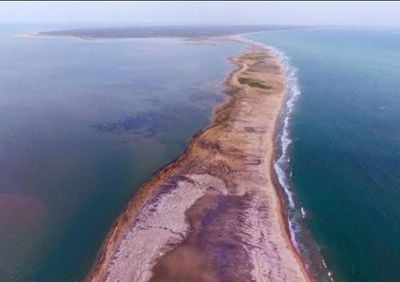
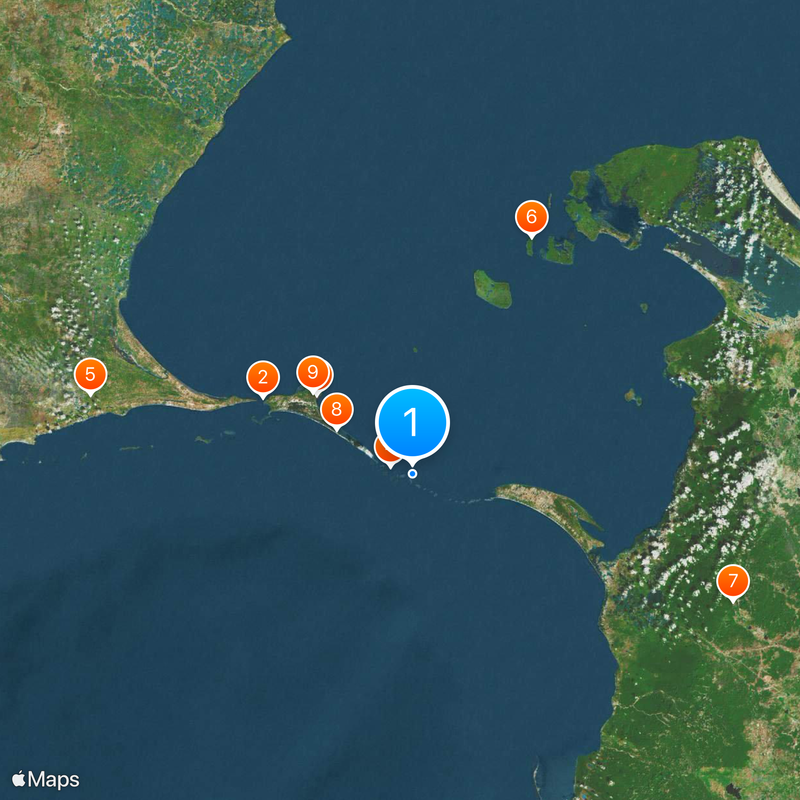
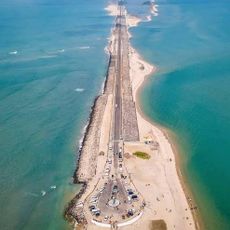
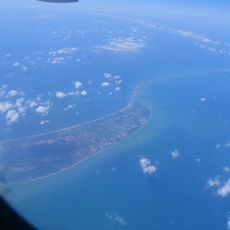
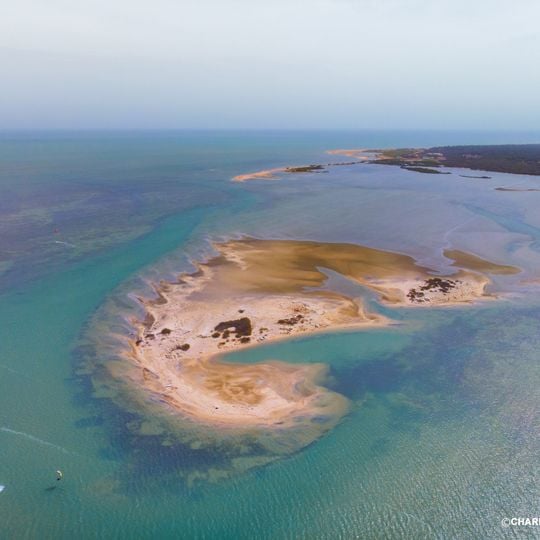
Ram Setu is a chain of limestone shoals stretching roughly 30 kilometers through the Palk Strait between southeastern India and northwestern Sri Lanka. The shoals lie mostly just below the water surface and form a natural connection between the two countries, with water depth varying between one and ten meters.
The Ramayana, composed between the 8th century BCE and the 3rd century CE, describes a bridge built by Rama to reach Lanka. Ibn Khordadbeh's Kitāb al-Masālik wa-l-Mamālik (c. 850) calls it Set Bandhai, and the name Adam's Bridge appeared around the time of Al-Biruni (c. 1030). Temple records suggest storms broke the Pamban link in 1480.
The name Rama Setu comes from the Ramayana, which tells that Rama's monkey army, led by Nala and Nila, built the bridge to reach Lanka. Every year at Dussehra, across India, Southeast Asia and East Asia, dance-dramas re-enact the Setu Bandhan, the building of the bridge. The episode is also told in the Mahabharata and in Kalidasa's Raghuvamsha.
The strait is typically only 1–3 m deep, and the shoals block navigation, so larger ocean-going vessels from the west must sail around Sri Lanka to reach India's eastern coast. The bridge runs from the Dhanushkodi tip of Pamban Island, reached from the mainland by the 2 km Pamban Bridge, to Mannar Island, linked to Sri Lanka by a causeway.
The Geological Survey of India's "Project Rameshwaram" dated coral in the area to about 22,25,000 years, while a 2003 survey by Bharathidasan University, Tiruchirappalli, put Ram Setu at 17,50,000 years. Sand dunes between Dhanushkodi and the shoals are estimated at only 500 to 600 years old.
The community of curious travelers
AroundUs brings together thousands of curated places, local tips, and hidden gems, enriched daily by 92,188 contributors worldwide.