Golconda, Archaeological site in Hyderabad, India.
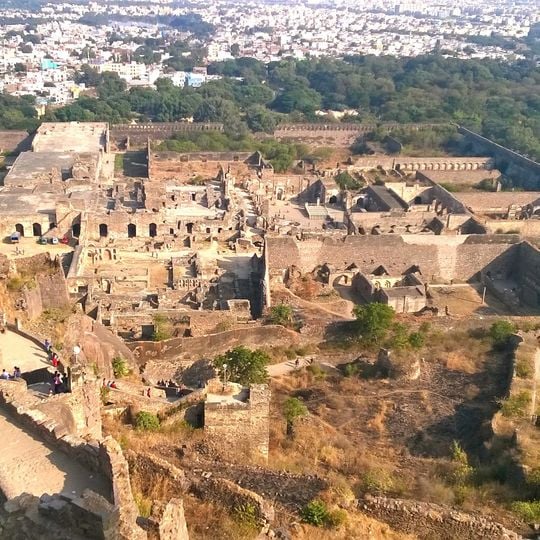
Golconda is a sprawling stone fortification atop a granite outcrop in Hyderabad, with over eighty bastions and eight massive gates connected by steep ramps. The complex spans several levels with royal palaces, mosques, armories, and water reservoirs distributed across the hilltop plateau.
The Kakatiya dynasty built a simple fortress here in the 12th century, which was later expanded by the Qutb Shahi rulers into a capital in the 16th century. Mughal emperor Aurangzeb captured the site after a months-long siege in 1687, ending Qutb Shahi rule.
The name derives from the Telugu Golla Konda, meaning "shepherd's hill". In the early 17th century Golconda had a strong cotton-weaving industry: muslin and calico cloth, plain or printed with indigo, chay-root and vegetable yellow, was exported to Persia, Europe, Java and Sumatra.
The climb to the upper levels takes about an hour over stone steps and ramps, and sturdy footwear is recommended. An early morning visit before 10 am avoids the midday heat and offers better views over the city.
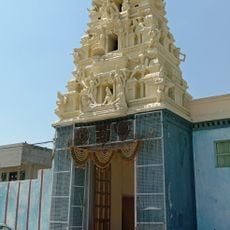
At Fateh Darwaza, a handclap below the dome is heard clearly at Bala Hisar, the fort's highest pavilion almost a kilometre away; the effect served as an alarm during attacks. The gate is studded with giant iron spikes to stop elephants battering it down, and its carvings of peacocks and yalis point to the fort's Hindu origins.
The community of curious travelers
AroundUs brings together thousands of curated places, local tips, and hidden gems, enriched daily by 93,673 contributors worldwide.