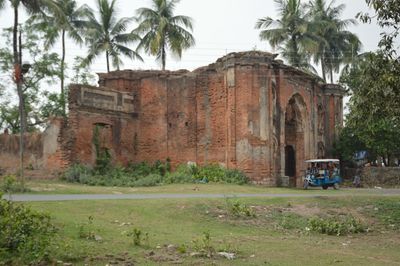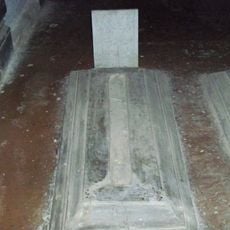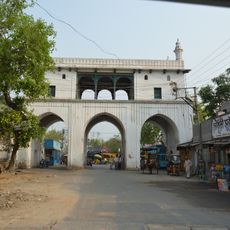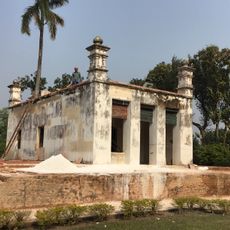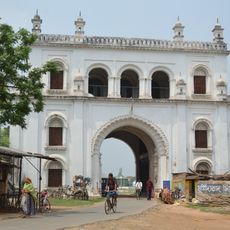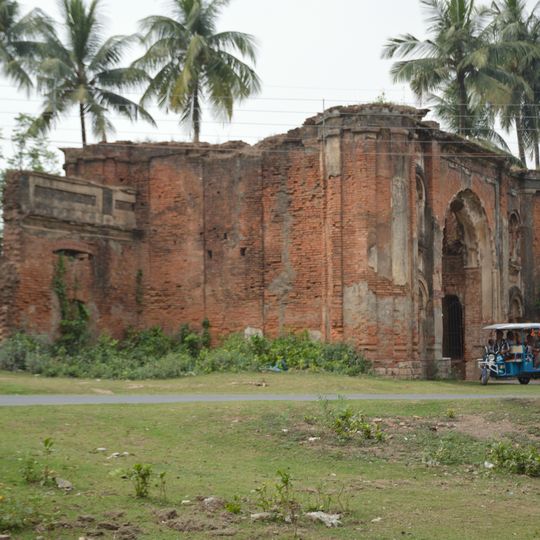
Namak Haram Deorhi, Palace gate in Murshidabad, India.
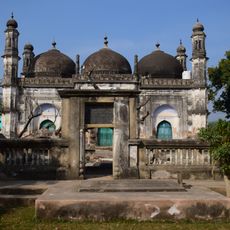
Namak Haram Deorhi is the ruined gateway of Mir Jafar's palace, originally called Jafragunj Deohri, in Lalbagh, Murshidabad. Its tall red brick facade is patched with grey plaster and pierced by a deep pointed arch that opens onto a dark passage; a broken lower section with a small rectangular opening stands at the far left. The top edge is jagged and roofless, and grass grows in front.
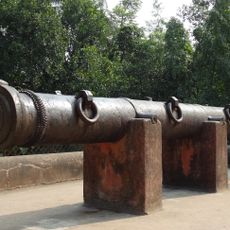
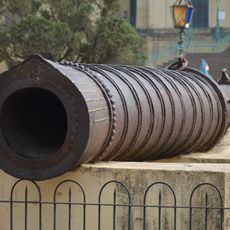
Mir Jafar used this building as his residence before he ascended the throne of Bengal, while he was Commander-in-Chief of the subha. The palace was fortified with towers and turrets and mounted with a cannon; today only the gateway that led to it survives. On the eve of the Battle of Plassey in 1757, William Watts met Mir Jafar and his son Mir Miran here, and Jafar swore on the Quran to betray Nawab Siraj ud-Daulah.
The name combines the Hindi words namak haram ("one who cannot be trusted") and deorhi ("gate"), given because Mir Jafar's betrayal of Siraj ud-Daulah at Plassey let the East India Company annex eastern India. The site is also called Jafragunj Deohri, and in English Traitor's Gate.
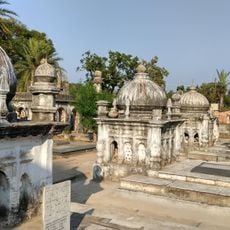
The gate stands in Lalbagh, directly opposite the Jafarganj Cemetery, with the House of Jagat Seth, Nashipur Rajbari, Kathgola Palace and Azimunissa Begum's tomb all nearby. Only the gateway survives, so the visit is short; the ground around the brick ruin is grass and uneven. Baranagar's temple town on the far bank of the Bhagirathi can be reached by country boat from Ajimganj.
The gate's name comes from a Hindi phrase meaning "one who cannot be trusted", given because Mir Jafar had Siraj ud-Daulah killed to take the throne of Bengal. The palace once had towers, turrets and a cannon; only the gateway survives.
The community of curious travelers
AroundUs brings together thousands of curated places, local tips, and hidden gems, enriched daily by 92,770 contributors worldwide.