Katra Masjid, Islamic monument in Murshidabad, India
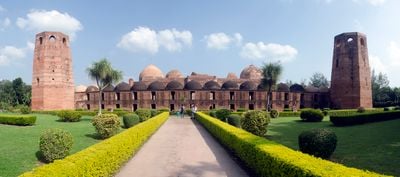
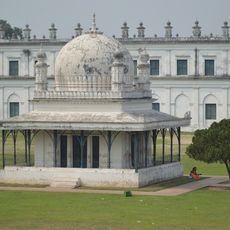
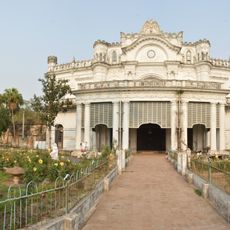
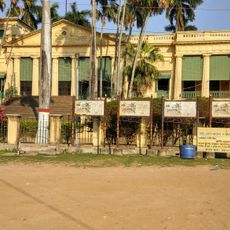
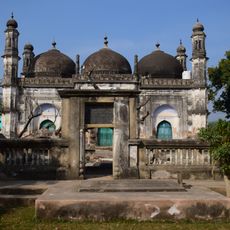
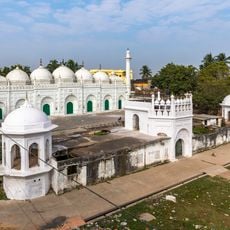
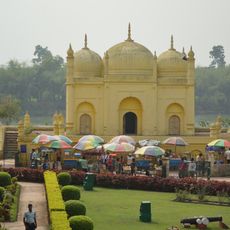
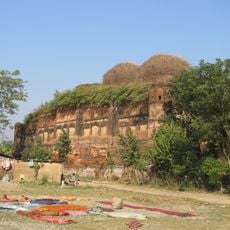
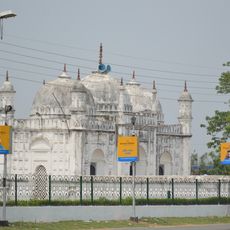
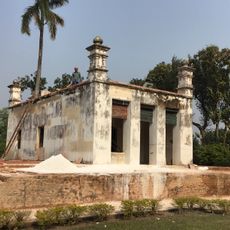
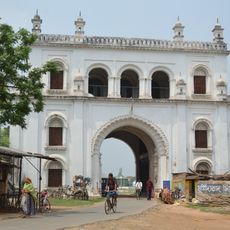
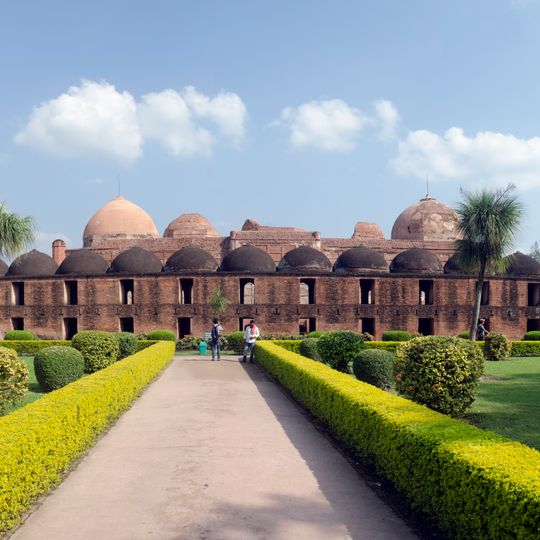
Katra Masjid is a brick mosque and former caravanserai on a square plinth in Murshidabad, built in 1137 AH (1724/1725 CE). It has no pillars: the prayer hall rests on a raised platform and arches, divided into five bays with five domes, of which some survived the 1897 earthquake. Two-storey domed cells, each about 20 square feet with six arched doorways, ring the courtyard as a cloister. Two octagonal minarets, 21 metres high and 7.6 metres in diameter, stand at the front corners, and two more were partly destroyed.
Murshid Quli Khan moved Bengal's capital from Dhaka to Murshidabad in 1717 and had Katra Masjid built as the new capital's Jama Masjid between 1723 and 1724, entrusting the work to the architect Murad Farash Khan. The complex served as mosque, madrasa and caravanserai, with cells for up to 700 Quran readers. The 1897 earthquake destroyed much of it, including the domes of the two front minarets.
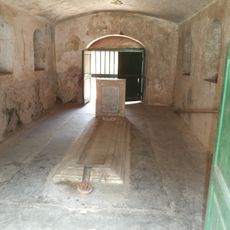
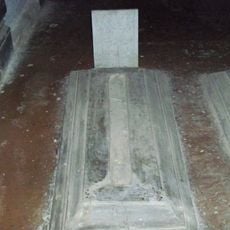
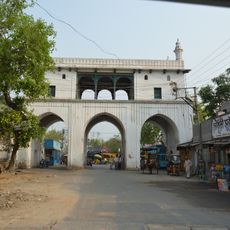
The name Katra means market, from the bazaar that once stood beside the mosque. The two-storey cells around the courtyard, each about 20 square feet with six arched doorways, housed Quran readers; in 1780 William Hodges recorded 700 living there. The tomb of Murshid Quli Khan lies beneath the fourteen steps of the eastern entrance, as he wished to be trodden by those entering.
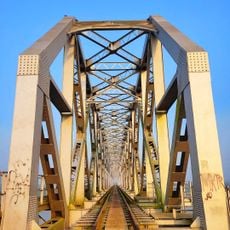
The easiest way to reach this monument is by train to Murshidabad station, which connects to other major cities. Visitors should expect uneven ground and narrow passages, so allow time to explore at a relaxed pace.
Nawab Murshid Quli Khan chose to be buried beneath the eastern entrance stairs, asking to be trodden by worshippers entering the mosque. His grave lies under the fourteen steps, a detail many visitors walk over without noticing.
The community of curious travelers
AroundUs brings together thousands of curated places, local tips, and hidden gems, enriched daily by 92,679 contributors worldwide.