Hazarduari Palace, Palace and museum in Murshidabad, India
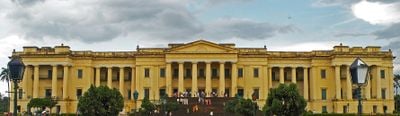
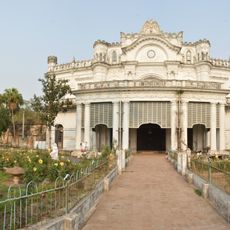
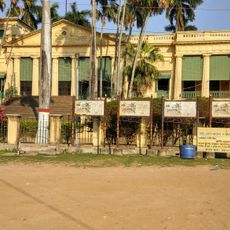
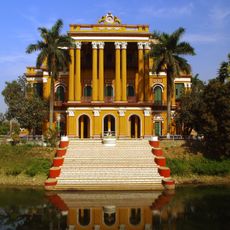
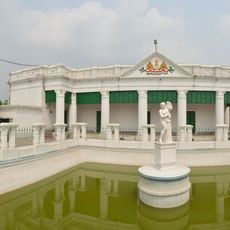
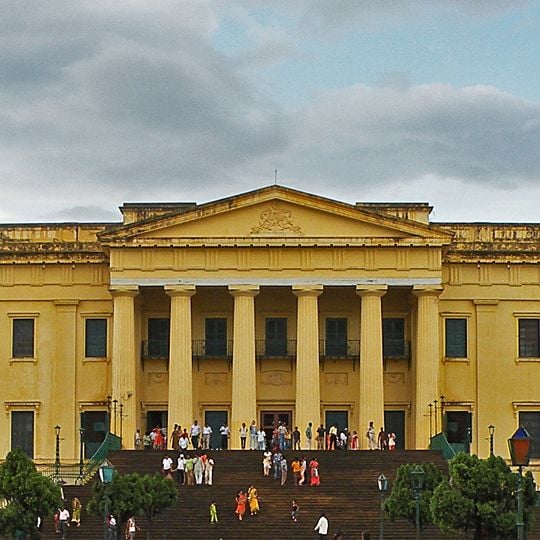
Hazarduari Palace is a long, symmetrical two-storey building with a pale yellow central block and cream-white wings, its projecting portico topped by a triangular pediment and supported by six tall columns. Behind the columns are two rows of openings, with a doorway at the base, and each wing is pierced by a row of rectangular windows. A flat roofline with a low central parapet runs above the walls, and outward-facing lamps light the facade.
The architect Duncan Macleod designed the building in the neoclassical style for Nawab Nazim Humayun Jah between 1829 and 1837. After completion, the palace served as the residence of the Nawabs of Bengal until the British takeover of the region.
The name means "palace of a thousand doors" and refers to the real and false entries throughout the building. Visitors today see halls with chandeliers, weapon collections, and paintings that show the life of the Nawabs.
The grounds remain closed on Fridays but are open every other day of the week. Guided visits help understand the room layout and the displayed objects in the different halls.
Of the palace's thousand doors, a hundred are false, built so that a thief fleeing with loot would pick the wrong exit and be caught by the Nawab's guards. The building was earlier called Bara Kothi, and its name comes from hazar, "thousand", and duari, "the one with doors".
The community of curious travelers
AroundUs brings together thousands of curated places, local tips, and hidden gems, enriched daily by 92,677 contributors worldwide.