Tipu Sultan's Summer Palace, Royal palace in Bangalore, India
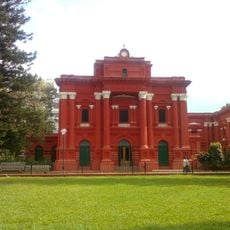
Tipu Sultan's Summer Palace is a two-storey building of teak and stone, raised on a rectangular stone base inside the Bangalore Fort. Its front carries tall wooden pillars on stone plinths supporting heavy beams, with semi-circular Indo-Islamic arches and capitals between them, the colonnade coated in brown and yellow. A wide rectangular hall occupies the centre, with projecting balconies to the north and south, and stairs lead to the upper rooms.
Built between 1781 and 1791 within the Bangalore Fort walls, the palace served as a summer retreat for Tipu Sultan until his defeat in 1799. After this turning point, the building's purpose shifted and it was later preserved as a historical record.
An inscription set into the palace wall calls it a "abode of happiness and envy of heaven". The upper-floor corner rooms are identified as the zenana quarters, and the ground-floor rooms now hold a small museum with portraits of people and places of Tipu Sultan's time.
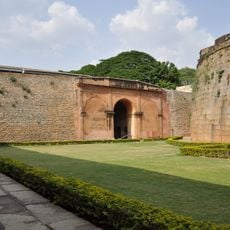
The palace stands at the centre of Old Bangalore, near the Kalasipalya bus stand, inside the area of the old Bangalore Fort. The Archaeological Survey of India maintains it as a tourist spot, and the ground-floor rooms hold a small museum. The garden and lawn in front are kept by the Karnataka Horticulture Department.
The palace walls carry an inscription calling the building "the abode of happiness and the envy of heaven". The ground-floor room now holding the museum was originally a chamber beneath the projecting balcony where Tipu Sultan held his daily durbar.
The community of curious travelers
AroundUs brings together thousands of curated places, local tips, and hidden gems, enriched daily by 93,962 contributors worldwide.