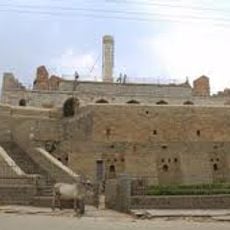
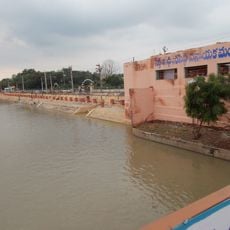
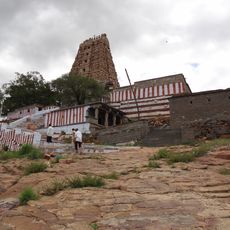
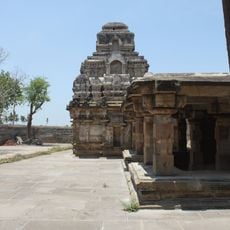
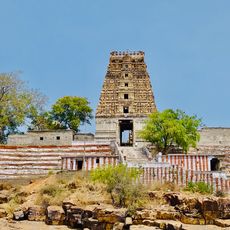
Yaganti Temple, Hindu temple in Nandyal district, India.
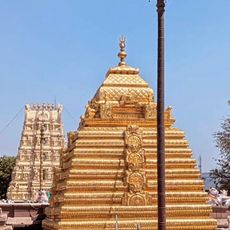
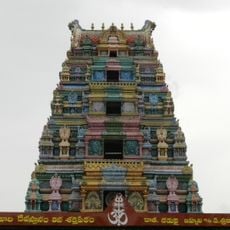
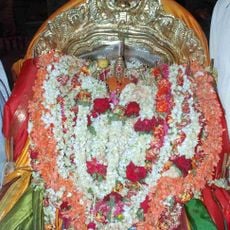
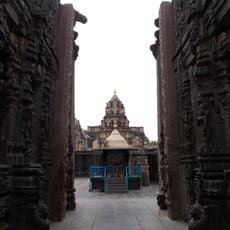
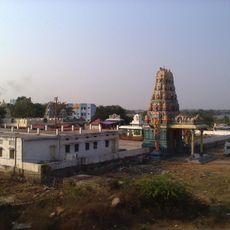
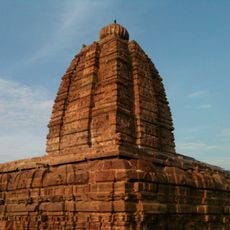
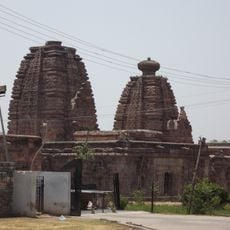
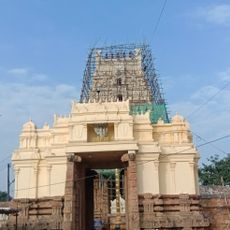
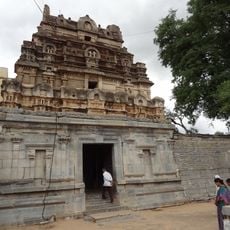
Yaganti Temple, also called Sri Yaganti Uma Maheswara Temple, has a five-storey main gopuram leading to the ranga mantapa, mukha mantapa, antarala and garbhagriha, where the linga bears figures of Uma and Maheswara. A tall tiered stone tower of light tan and reddish-brown blocks rises over the paved courtyard, its diminishing storeys covered in dense vertical carvings and horizontal bands, with a recessed arched niche near the top and a rounded finial above.
This shrine was built in the 15th century by King Harihara Bukka Raya of the Sangama Dynasty during the expansion of the Vijayanagara Empire. It stands as a record of that era's regional rule and religious building projects.
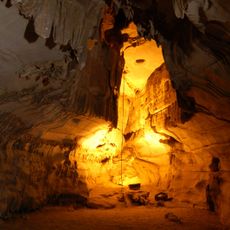
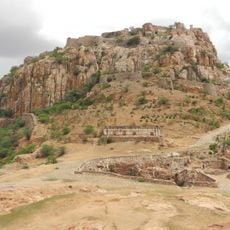
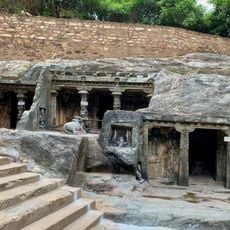
The name Yaganti is tied to the devotee Chitteppa, who cried "Neganti Shivanu ne kanti" (I saw Shiva) when Shiva appeared to him as a tiger; a nearby cave bears his name. Maha Shivaratri draws devotees from across Andhra Pradesh. Crows are said to be absent here after Agastya cursed them for disturbing his penance.
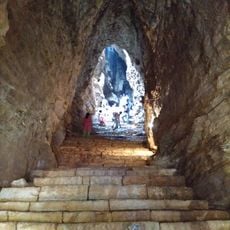
Yaganti is reached only by road, about 14 km west of Banaganapalle on the Banaganapalle–Peapully road and roughly 100 km from Kurnool; buses run from Kurnool, Banaganapalle and Nandyal. The Agastya cave is entered by climbing 120 steep steps, while the Veera Brahmam cave requires bending low. Accommodation is available at Yaganti and in nearby Banaganapalle.
The Nandi statue in front of the temple is called Yaganti Basavanna. Local accounts say it was once smaller and that one pillar was removed because the statue had grown; the Archaeology Department is said to have confirmed growth of about one inch every twenty years. Potuluri Veerabrahmendra Swami's Kalagnanam foretells that this bull will come alive and bellow at the end of Kali Yuga.
The community of curious travelers
AroundUs brings together thousands of curated places, local tips, and hidden gems, enriched daily by 93,381 contributors worldwide.