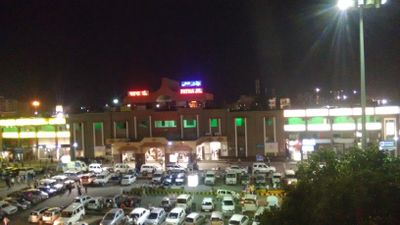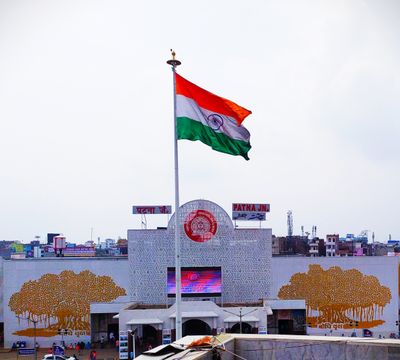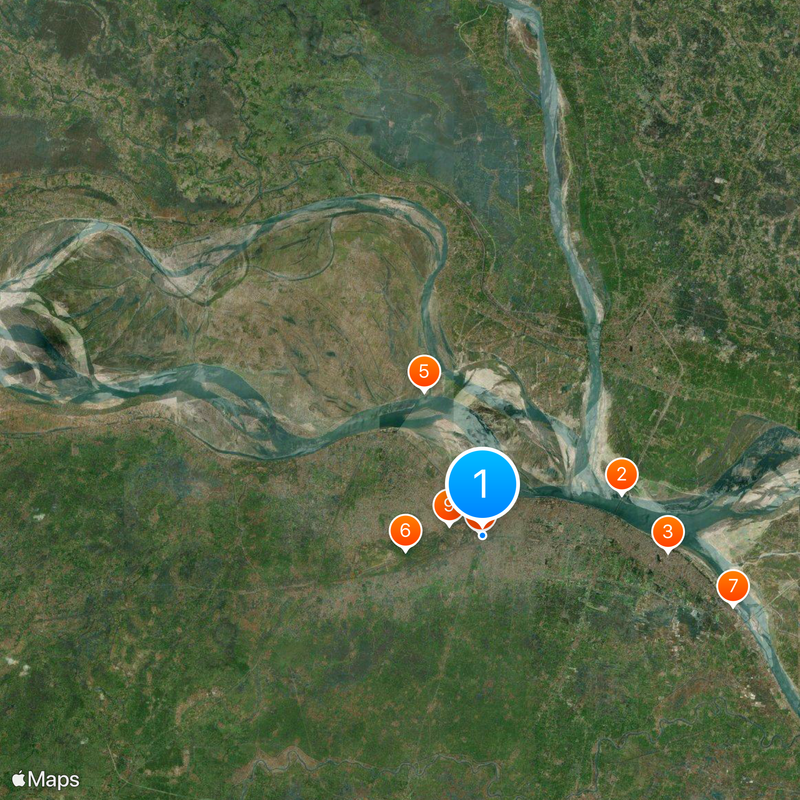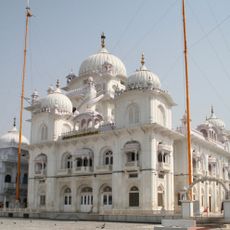
Patna Junction railway station, Railway station in Patna, India
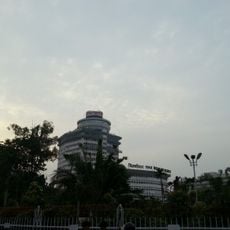
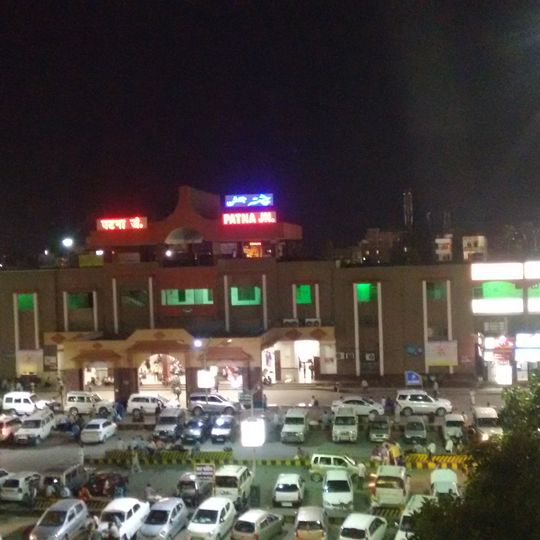
Patna Junction is a railway hub in Patna, the capital of Bihar state in eastern India, with ten platforms and fifteen tracks serving long-distance and regional connections. The facility operates on several major routes, including the Howrah-Delhi main line and southward connections to Gaya and other destinations.
The station opened on December 25, 1862, under the name Bankipore Junction during British colonial rule, connecting the region to major trade and administrative centers. After independence and the expansion of Indian Railways, the facility was enlarged several times and renamed after the city of Patna.
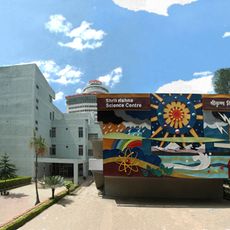
Waiting areas display Madhubani-style artwork, a traditional painting technique from rural Bihar originally created on village mud walls. These colorful motifs with geometric shapes and mythological scenes bring local craftsmanship into the daily routines of travelers passing through the station.
Three footbridges connect the platforms, allowing travelers to move between tracks even during heavy traffic. Reservation counters with computerized systems are located in the main building, along with food vendors and drinking water facilities on the platforms.
The waiting hall ranks among the largest in the entire Indian Railways network, accommodating more than 300 people at once with digital boards displaying departure times and platform numbers. Despite heavy passenger traffic, this space often remains quieter than the platforms themselves, as many travelers head directly to their trains.
The community of curious travelers
AroundUs brings together thousands of curated places, local tips, and hidden gems, enriched daily by 90,751 contributors worldwide.