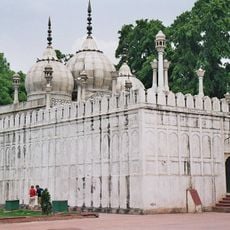
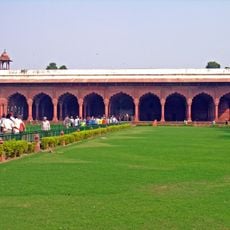
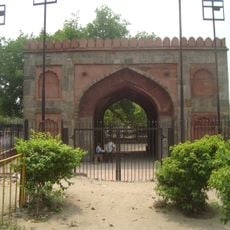
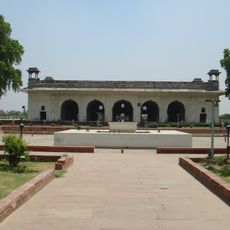
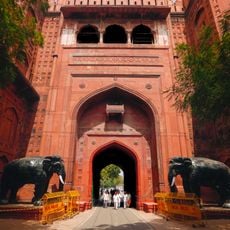
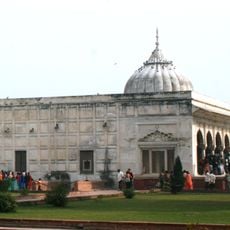
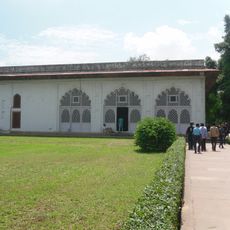
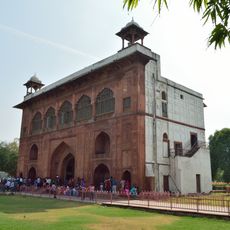
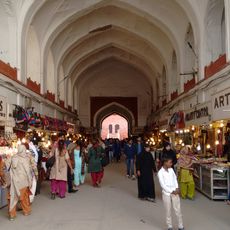
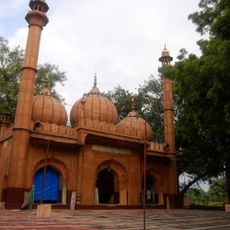
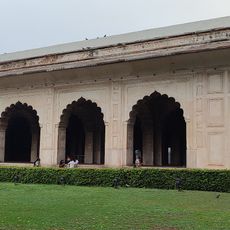
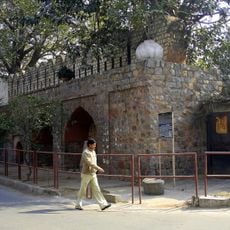
Zeenat-ul-Masajid, Mughal mosque in Daryaganj, Delhi, India.
Zeenat-ul-Masajid is a Mughal-era mosque in Daryaganj with three marble domes bearing red sandstone stripes, high arched entrance passages, and three-story minarets positioned on either side of the main facade. The building combines geometric forms with decorative elements using materials and proportions characteristic of that period.
The mosque was built in the early 1700s by Zeenat-un-Nissa, daughter of Emperor Aurangzeb. British colonial forces later took control of the building and converted it into a military bakery before it eventually returned to religious use.
The structure reflects design principles found in the Jama Masjid, showing how Mughal artistic traditions continued in religious buildings of that era. The local Muslim community shapes how the space is used and maintained today.
The mosque stands south of the Red Fort near the Yamuna River in a historic section of the city. Visitors should remember this is an active place of prayer, so appropriate behavior and awareness of prayer times matter when planning a visit.
The name Ghata Masjid comes from the main entrance facing the Ghat of the Walled City, a detail many visitors miss. The domes feature inverted lotus-blossom ornaments, a decorative choice that sets this building apart from other mosques of the period.
The community of curious travelers
AroundUs brings together thousands of curated places, local tips, and hidden gems, enriched daily by 90,807 contributors worldwide.