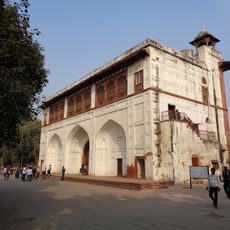
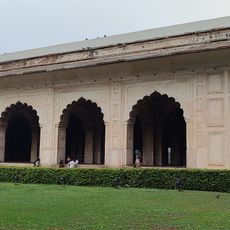
Diwan-i-Khas, Private audience hall in Red Fort, Delhi, India
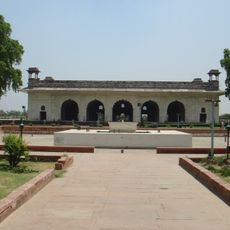
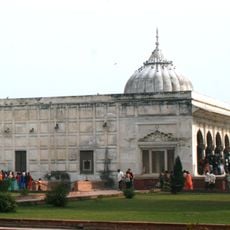
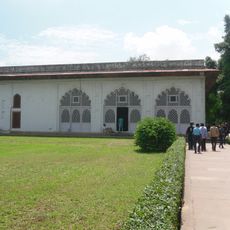
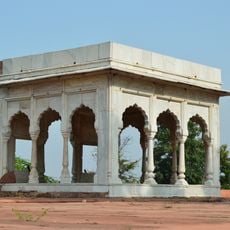
The Diwan-i-Khas is a rectangular central hall in the Red Fort featuring marble columns, arches, and intricate floral patterns inlaid into the walls and piers. The space feels light and open, with ornamental details that draw the eye from all directions.
Built in 1648, the Diwan-i-Khas was the hall where Shah Jahan received courtiers and state guests; it was also called the Shah Mahal. A gate north of the Diwan-i-Am led through the Jalau Khana court to it, and two arcaded enclosures west of the hall, one for nobles and one for lower ranks, were destroyed after the Indian Rebellion of 1857. The interior was plundered that year, and the ceiling now in place was installed in 1911.
The hall displays Persian verses by the poet Amir Khusrow inscribed on its walls, merging literary expression with architectural design. These inscriptions reveal the artistic ambitions of the Mughal rulers of that era.
The hall sits in the innermost court of the Red Fort, reached through a gate on the north side of the Diwan-i-Am. The arcaded courts that once stood west of it, for nobles and lower ranks, were destroyed after 1857, so the approach is now more open. Look for the restored inlay panels and the reproduced gilding on one pillar at the front.
A water channel called Nahar-i-Bihisht, the Stream of Paradise, once ran through the center of this hall with deep symbolic meaning. This flowing water connected the space to cosmic concepts of the garden and divine order.
The community of curious travelers
AroundUs brings together thousands of curated places, local tips, and hidden gems, enriched daily by 94,623 contributors worldwide.