San Giovanni Battista, Renaissance church in Fasano, Italy.
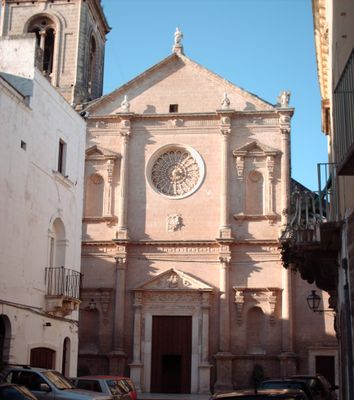
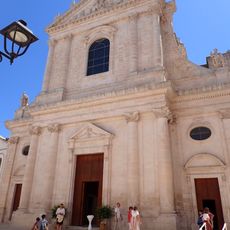
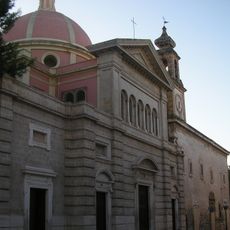
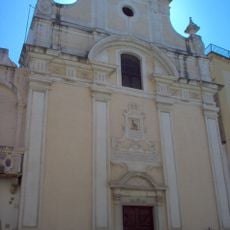
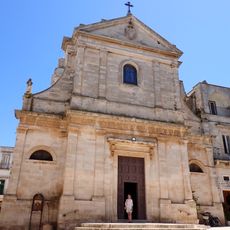
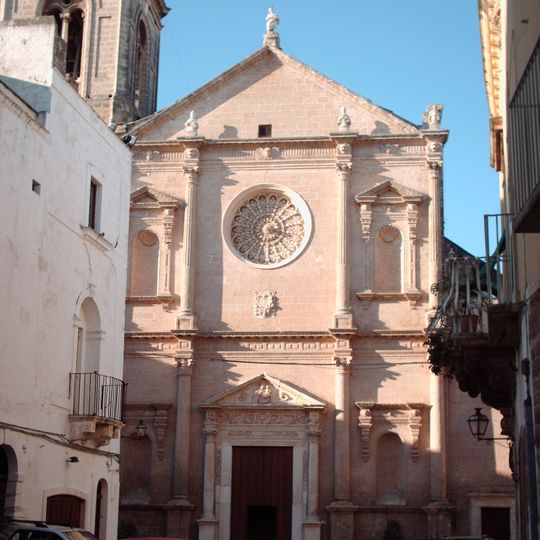
San Giovanni Battista is a Renaissance church in Fasano built with local tufa stone and featuring a facade divided by semi-columns into three sections decorated with saint statues. Inside, three naves separated by pillars create the main worship space, with various religious ornaments and bells positioned throughout the structure.
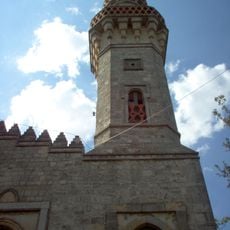
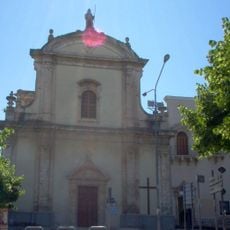
The church replaced an older small temple demolished around 1330, when Fasano built a larger structure dedicated to its patron saint. It opened for worship in the 17th century, as recorded by the 1600 inscription above the portal. The bell tower, designed by Magaletti, was finished in 1763; lightning destroyed its onion crown on 15 February 1897, and the planned taller reconstruction was never completed. Restoration in 1967–1970 removed most of the Baroque appearance.
The church is the seat of a parish and holds the title of chiesa priorale: the balì of Santo Stefano, prior of the Order of Malta, had jurisdiction and the right to a seat at major ceremonies. The facade emblem combines the faso, a local symbol, with the Agnus Dei under the Maltese cross, representing the town and clergy who built it. The wooden altar is where Fasano residents prayed to the Virgin during Turkish invasions.
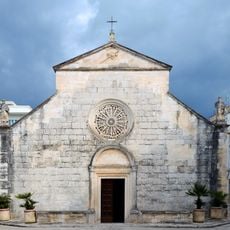
The main portal faces the piazza; the bell tower stands to the left of the facade, so the entrance is easy to pick out from the surrounding streets. The interior is a Latin cross about 53 metres long, with the ovoid dome over the crossing of the nave and first transept. Look for the 1910 marble floor, which covers the old burial chambers beneath the church.
Below the rose window on the facade sits the parish emblem showing a lamb beneath a Maltese cross. This symbol quietly merges religious and civic meaning, revealing how the church served both spiritual and administrative functions in the town's history.
The community of curious travelers
AroundUs brings together thousands of curated places, local tips, and hidden gems, enriched daily by 93,762 contributors worldwide.