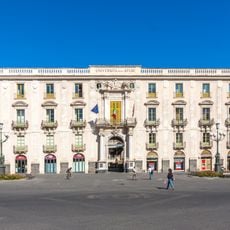
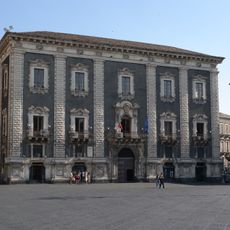
Museo Biscari, Archaeological museum in central Catania, Italy
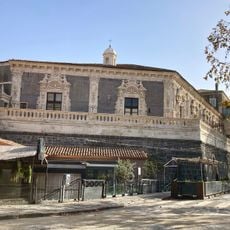
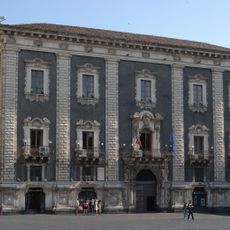
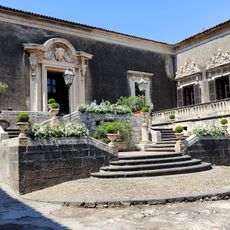
The Museo Biscari was a collection of naturalia and artificialia assembled by Ignazio Paternò Castello, fifth prince of Biscari, in a wing built for it in the family's Palazzo Biscari in Catania's Civita quarter. Two adjacent galleries, south and east of the palace, were built from 1752 to 1757; by 1776 the museum comprised ten rooms, three galleries and an open atrium, with two inner courtyards holding marbles and statues. The collection moved to Castello Ursino in 1927.
Ignazio Paternò Castello, fifth prince of Biscari, had two galleries built south and east of his family palace between 1752 and 1757 to hold his naturalia and artificialia collections; the museum was inaugurated in May 1758. In 1927 the collection was moved to Castello Ursino, where most of it is kept and displayed.
The name comes from Ignazio Paternò Castello, fifth prince of Biscari, who founded the collection and had it installed from 1756 in two galleries built for it south and east of the palace. A medal struck for the 1758 inauguration declared its purpose: public utility, the fatherland's honour and the convenience of scholars.
The Museo Biscari no longer exists as a museum: its collections were moved to Castello Ursino in 1927, where most of the original pieces are kept and displayed. The rooms it once occupied are part of Palazzo Biscari in the Civita district, a private residence that can be visited only by arrangement.
The museum's founding medal proclaimed its mission in Latin: PUBLICAE UTILITATI, PATRIAE DECORI, STUDIOSORUM COMMODO — for public utility, the honour of the homeland and the convenience of scholars. The prince had obtained custody of finds from Catania's theatre on condition that he display them in a museum.
The community of curious travelers
AroundUs brings together thousands of curated places, local tips, and hidden gems, enriched daily by 94,089 contributors worldwide.