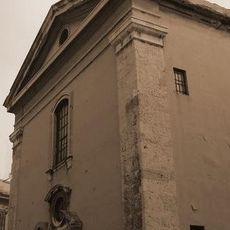
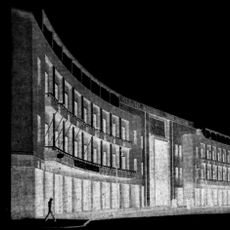
Palazzo Piacentini, Neoclassical palace in Messina, Italy.
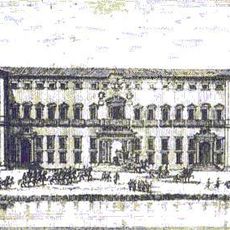
Palazzo Piacentini, also known as the Palazzo di Giustizia, stands on the site of the Grande Ospedale destroyed in the 1908 earthquake. Its neoclassical facade follows German models and the Doric order, inspired by the Brandenburg Gate and Sicilian Doric temples. On the attic, Ercole Drei's quadriga driven by Minerva is made of a bronze and aluminium alloy.
The courthouse was approved in 1912 on a design by Marcello Piacentini, to be built by the Porcheddu firm on the site of the Grande Ospedale, destroyed in the 1908 earthquake. Work was suspended during World War I and resumed in 1923 under Carmelo Salvato e figli. Piacentini kept the structure but replaced the neo-Renaissance shell with German neoclassical models, the Doric order of the Brandenburg Gate and Sicilian Doric temples. Finished in 1927, it was inaugurated in 1928.
The facade uses the Doric order, which Piacentini modelled on the Brandenburg Gate in Berlin and on the Doric temples of Sicily. The building is topped by a quadriga driven by the goddess Minerva, made by sculptor Ercole Drei in a bronze and aluminium alloy.
The palace functions as Messina's courthouse with multiple courtrooms and administrative offices accessed through the main entrance on Via Tommaso Cannizzaro. Since it remains an active judicial building, visiting hours depend on court schedules and visitors should plan ahead.
The palace stands on the site of the Grande Ospedale, destroyed in the 1908 earthquake. Its attic carries a quadriga driven by Minerva, made by Ercole Drei in a bronze and aluminium alloy.
The community of curious travelers
AroundUs brings together thousands of curated places, local tips, and hidden gems, enriched daily by 94,122 contributors worldwide.