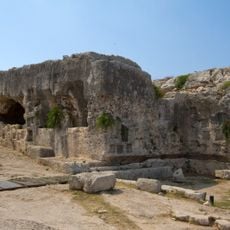
Temple of Olympian Zeus, Doric temple ruins in Syracuse, Italy.
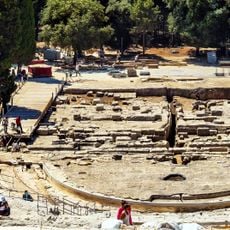
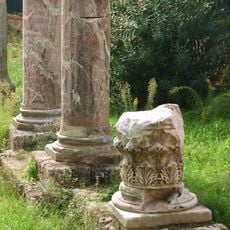
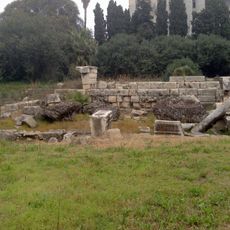
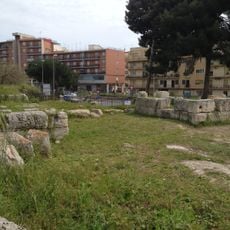
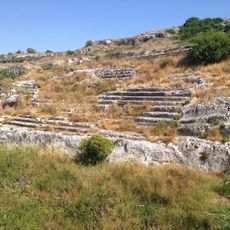
The Temple of Olympian Zeus in Syracuse is an Archaic Doric temple built in the first decades of the 6th century BC, of which only part of the stepped platform (crepidoma) and two monolithic columns of the south side, about 8 metres high, remain; the columns were restored in 2025. The peristasis had six columns on the short sides and seventeen on the long sides, and the interior comprised a pronaos, a naos and an adyton. The ruins stand outside the ancient city walls near the Great Harbour, the Via Elorina and the sacred river Ciane.
Built in the first decades of the 6th century BC, around 555 BC, the temple is the second oldest in Syracuse after the temple of Apollo on Ortygia; a predecessor structure may have stood on the site in the 7th century BC. Its priestly caste was the most important in the city, and the temple held the citizens' census lists and the wealth of the polis, as Plutarch recounts. It was occupied by Hippocrates of Gela at the battle of the Elorus, by the Athenians, by the Carthaginians in 391 and 309 BC, and by the Romans during the siege of Syracuse.
Ancient Greek sailors used the columns as a landmark when entering or leaving the harbor of Syracuse. The ruins still stand in the same spot today and remain visible from the water.
The site sits right by the water at the edge of Syracuse and is easy to spot from the harbor. The ground around the ruins is uneven, so solid footwear is a good idea before exploring the area.
In the 17th century seven columns were still standing; today only the lower parts of two south-side columns remain, restored in 2025. The temple was built around 555 BC, making it Syracuse's second-oldest temple after the Apollonion on Ortygia. Its priestly caste was considered the city's most important, and the temple held the citizens' census lists and the wealth of the polis, as Plutarch recounts.
The community of curious travelers
AroundUs brings together thousands of curated places, local tips, and hidden gems, enriched daily by 92,886 contributors worldwide.