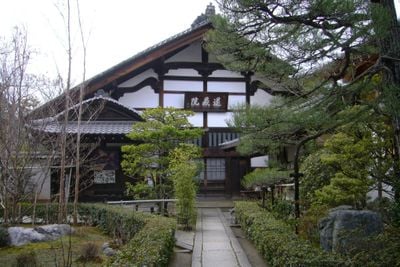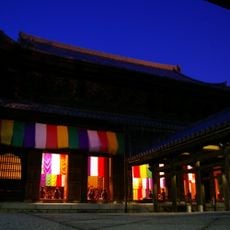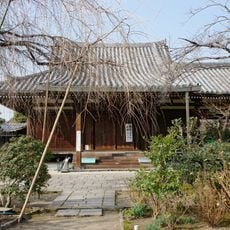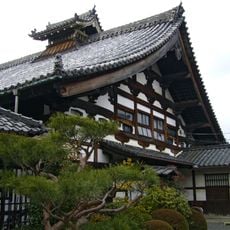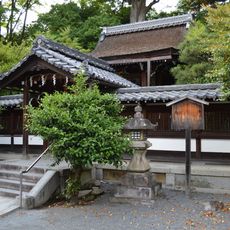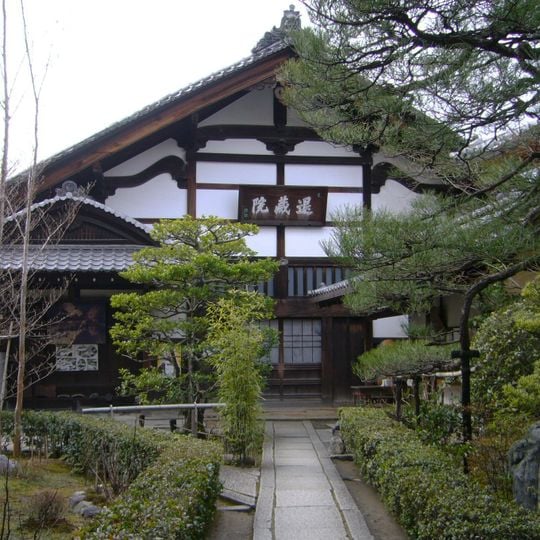
Taizō-in, Zen Buddhist temple at Myoshin-ji complex in Kyoto, Japan
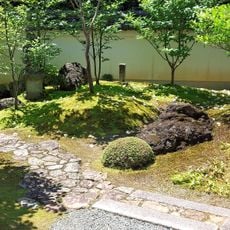
Taizō-in is a Zen Buddhist temple within the Myōshin-ji complex in Kyoto, featuring two contrasting gardens. The dry stone garden and circular pond garden each offer distinct visual and spatial experiences.
Hatano Shigemichi, a local lord from Echizen Province, founded Taizō-in in 1404 at Senbon-dori Matsubara in Kyoto, with Muin Sōin, third head of Myōshin-ji, as founding abbot. Niho Soshun later moved it onto the Myōshin-ji grounds. The Ōnin War destroyed it along with Myōshin-ji, and Kinen Zenyu, a devotee of Emperor Go-Nara, rebuilt it in 1597.
The temple's best-known holding, the ink-and-light-colour Hyōnen-zu, is a replica displayed here; the original, a National Treasure painted by Josetsu around 1413, is on deposit at the Kyoto National Museum. It shows a man trying to catch a slippery catfish with a smooth gourd, a Zen kōan set as a painting. Thirty Zen monks added inscriptions above the picture.
The site is within walking distance of the train station and easy to reach on foot. Some areas may require guided visits or have specific access times, so it helps to plan ahead.
The pond garden Yoko-en was laid out by Kyoto gardener Kinsaku Nakane between 1963 and 1966, taking three years to complete. Its stream runs along the main axis toward the viewing position, widening around rocks before emptying into a pool, and a suikinkutsu buried in the garden produces a bell-like tone as water drips into its hidden jar.
The community of curious travelers
AroundUs brings together thousands of curated places, local tips, and hidden gems, enriched daily by 93,471 contributors worldwide.