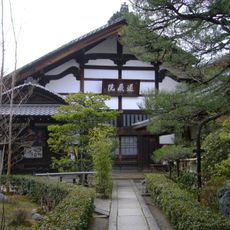
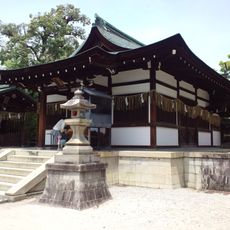
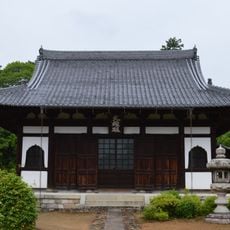
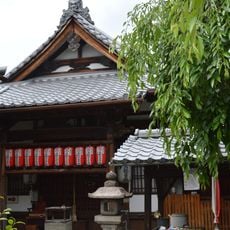
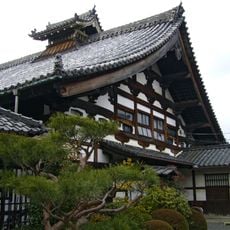
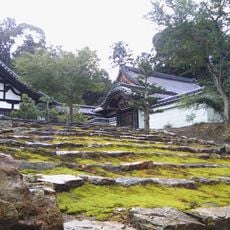
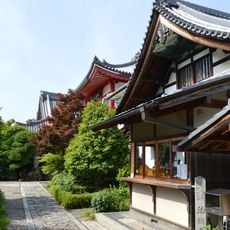
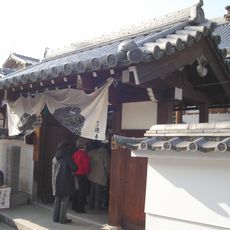
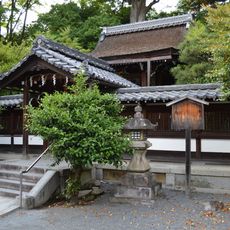
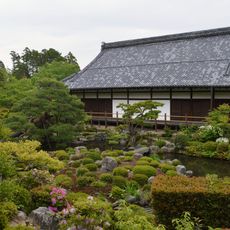
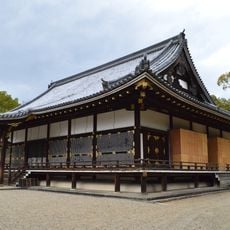
Ryōan-ji, Zen temple in Ukyo-ku, Kyoto, Japan
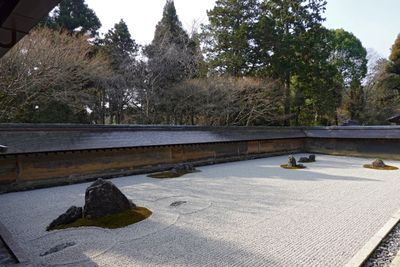
Ryōan-ji is a Buddhist temple in Ukyō in northwestern Kyōto, known for its rectangular dry garden of white gravel. Fifteen dark stones rest in small groups on moss islands, and low clay walls surround the entire composition.
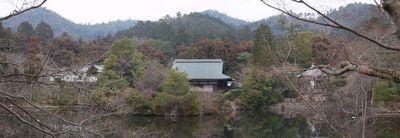
A noble family owned the grounds for centuries as a country estate until it was converted into a Zen monastery in 1450 under Hosokawa Katsumoto. Fires destroyed buildings repeatedly, but the stone garden remained largely in its original form.
The stone basin carries four characters that together form a teaching about contentment and meet visitors during hand washing. The inscription uses the central square opening as part of the calligraphy and becomes a visual riddle with philosophical meaning.
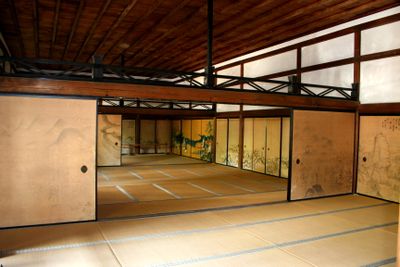
The best visiting time is early morning or on weekdays outside cherry blossom and autumn foliage season to avoid crowds. The hall overlooking the garden allows quiet sitting on wooden floors, though photography may be restricted by signage.
No viewer can see all fifteen stones at once, no matter where they stand or sit on the veranda. Only from a bird's eye view do all rocks become visible at once, reflecting a deliberate design choice by the creators.
The community of curious travelers
AroundUs brings together thousands of curated places, local tips, and hidden gems, enriched daily by 60,000 contributors worldwide.