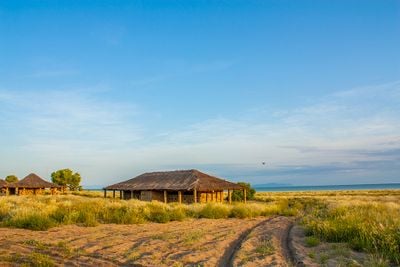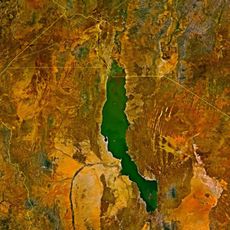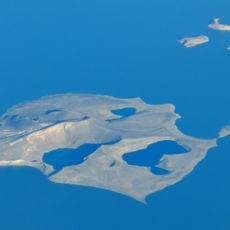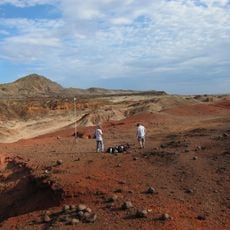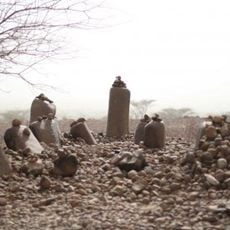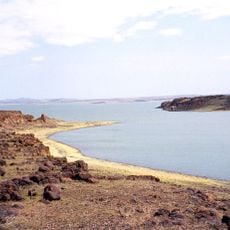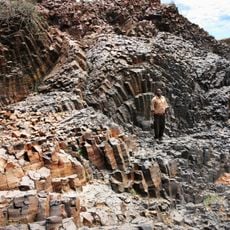
Koobi Fora, Prehistoric fossil excavation site near Lake Turkana, Kenya.
Koobi Fora is an archaeological site in Kenya with sedimentary rock layers that preserve over 2 million years of Earth's history. The location holds fossil remains, stone tools, and geological records that show how early human species lived and adapted.
A research team led by Richard Leakey set up a base camp here in 1968 and began systematic excavations. Major discoveries followed, including the skull KNM-ER 1470, which transformed understanding of early human development.
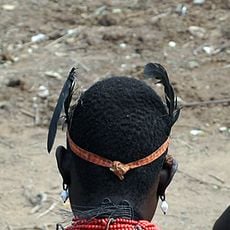
The name Koobi Fora comes from the Gabbra language and refers to a place where commiphora trees once grew and local communities gathered myrrh. This connection between the land and local traditions remains part of how the region is understood today.
Access is organized through guided tours managed by the National Museums of Kenya, which take visitors through designated excavation areas. The site is best visited during drier months when paths and roads are easier to navigate.
Researchers have uncovered remains of several different early human species at this location, showing how different ancestors lived side by side. This mix of discoveries offers a window into how early human history was more complex than once thought.
The community of curious travelers
AroundUs brings together thousands of curated places, local tips, and hidden gems, enriched daily by 90,846 contributors worldwide.