Gwangju World Cup Stadium, Football stadium in Seo District, Gwangju, South Korea.
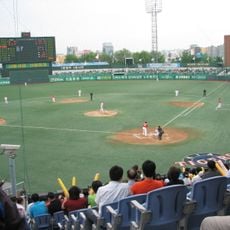
Gwangju World Cup Stadium is a multi-purpose stadium in Gwangju with a capacity of 40,245. Opened in 2001, it was built as a football-only venue for the 2002 FIFA World Cup by laying grass over the athletics track area, and it now hosts both football and athletics events. It is the home stadium of Gwangju FC.
Opened in 2001, the stadium was built for the 2002 FIFA World Cup and hosted the quarter-final between South Korea and Spain. From 2003 to 2010 it was the home ground of Gwangju Sangmu, and since 2011 it has been home to Gwangju FC. It was the main venue of the 2015 Summer Universiade.
The stadium is unofficially called the Guus Hiddink Stadium, after the Dutch coach who led South Korea to the 2002 World Cup semi-finals. It hosted the 3rd Asia Song Festival in 2006, organised by the Korea Foundation for International Culture Exchange, and was the main venue of the 2015 Summer Universiade.
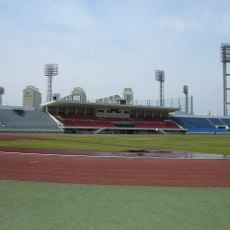
The stadium sits in the Seo-gu district of Gwangju, at the western edge of the city, and is managed by the Sports Support Division of the Culture & Sports Policy Office of Gwangju Metropolitan City. Gwangju FC plays its K League home matches here, so the ground is busiest on fixture days; check the club's fixture list before travelling. The 40,245 seats are arranged in a bowl around the pitch, with the athletics track ringing the field.
The stadium is unofficially called the Guus Hiddink Stadium, after the Dutch manager who led South Korea to the 2002 World Cup semi-finals. It hosted the quarter-final against Spain in that tournament, which South Korea won on penalties after a 0-0 draw. In 2006 it was the venue of the 3rd Asia Song Festival.
The community of curious travelers
AroundUs brings together thousands of curated places, local tips, and hidden gems, enriched daily by 93,467 contributors worldwide.