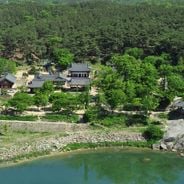
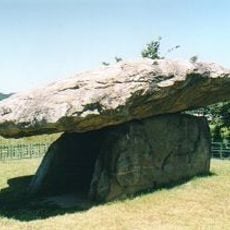
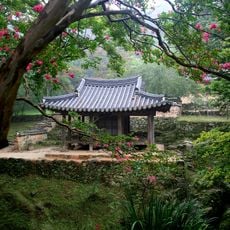
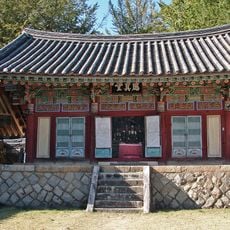
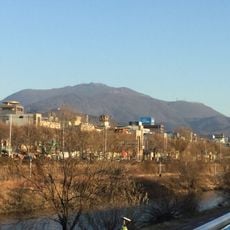
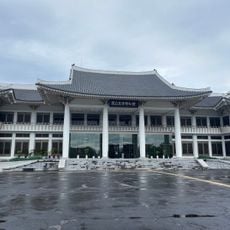
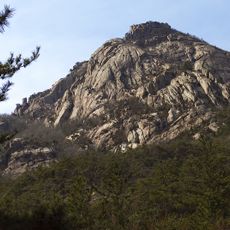
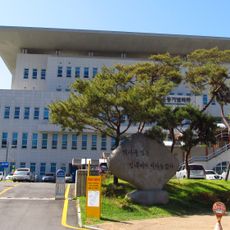
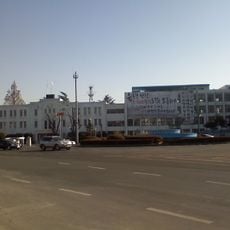
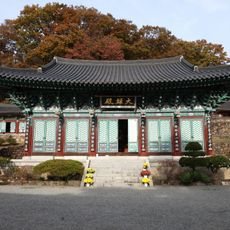
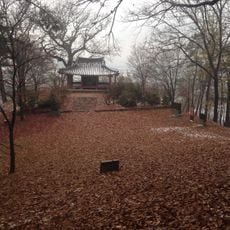
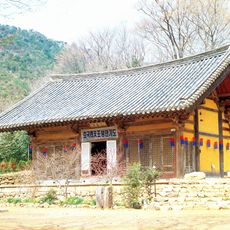
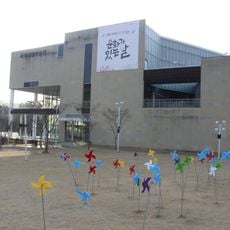
Unjusa, Buddhist temple in Hwasun County, South Korea.
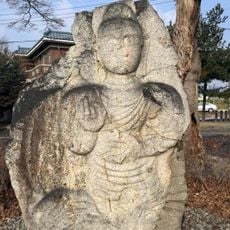
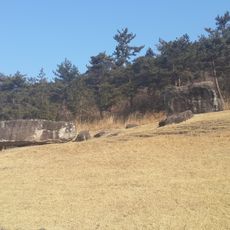
Unjusa is a Buddhist temple in Hwasun County whose grounds hold 91 stone Buddha statues and 21 stone pagodas, scattered across the fields and hills. The pagodas vary in shape and rise three, five, seven or nine stories, with X and III patterns carved on their surfaces. The statues range from a few dozen centimetres to over 10 m tall, with pillar-like bodies and plain robes.
Unjusa's founding is unverified: tradition credits the Silla monk Doseon, who chose the valley for its ship-like shape, while excavations by Jeonnam National University Museum between 1984 and 1991 dated the stone work to the 12th century, the middle Goryeo period. The 1432 Donggukyeojiseungnam already records a thousand Buddhas and pagodas, of which 91 statues and 21 pagodas survive.
The name Cheonbul Cheontap, "a thousand Buddhas and a thousand pagodas", comes from a legend that Doseon raised that many in a single night. The temple is also read through the Lotus Sutra: the Stone Buddhist Shrine, Treasure #797, shows Shakyamuni and Many Treasures Buddhas seated back to back, a scene from the sutra's 11th chapter.
Unjusa lies about 26 km southwest of Hwasun and 40 km south of Gwangju. The stone Buddhas and pagodas are scattered across fields and hillsides around the worship halls, so allow time to walk between them. The temple grounds were excavated and partly restored from 1984 onward, and a path to the lying Buddha was laid out in 1997.
The temple's name means "cloud dwelling". A legend says the monk Doseon summoned heavenly stonemasons to raise a thousand Buddhas and a thousand pagodas in one night; a boy imitated a rooster's crow, the masons fled at dawn, and two unfinished figures lying on the ground became the Wabul, the reclining Buddha statues.
The community of curious travelers
AroundUs brings together thousands of curated places, local tips, and hidden gems, enriched daily by 93,447 contributors worldwide.