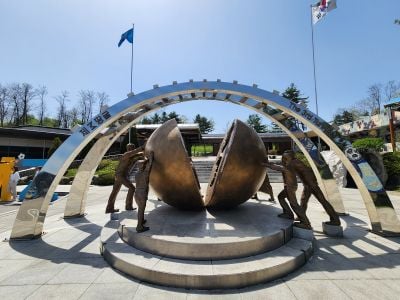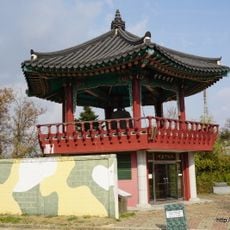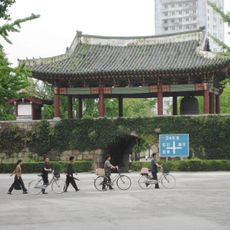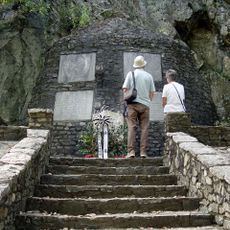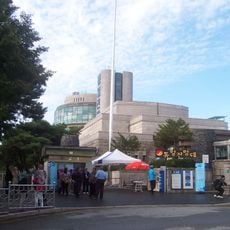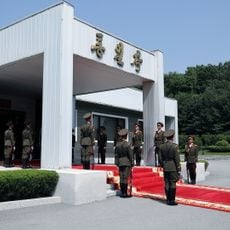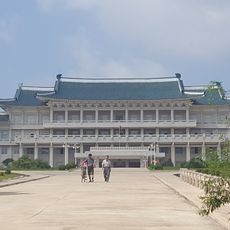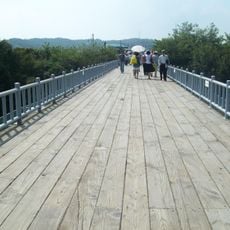
Third Tunnel of Aggression, Military tunnel at North Korea-South Korea border.
The Third Tunnel of Aggression is a 1,635 m long, 1.95 m high and 2.1 m wide passage through granite bedrock about 73 m below ground, dug from north to south under the DMZ. Visitors walk or ride a rubber-tyred train to three concrete barricades; the second is visible through a window in the third.
The tunnel was discovered in 1978 after South Korean forces detected suspicious explosions in the demilitarized zone. It remains interpreted as evidence of northern military preparations and the ongoing security threats on the peninsula.
The name "tunnel of aggression" was given by South Korea, which treated the passage as an act of aggression by the North. North Korea first denied building it, then declared it part of a coal mine blackened by blasting; signs inside point out that the granite walls hold no coal, which occurs in sedimentary rock.
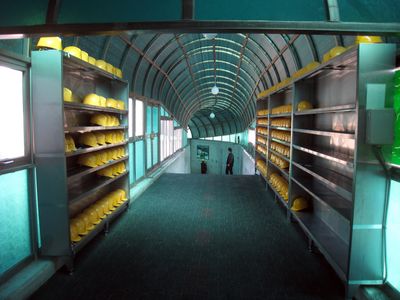
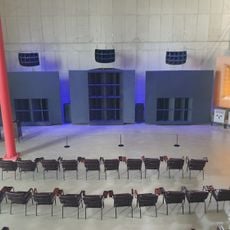
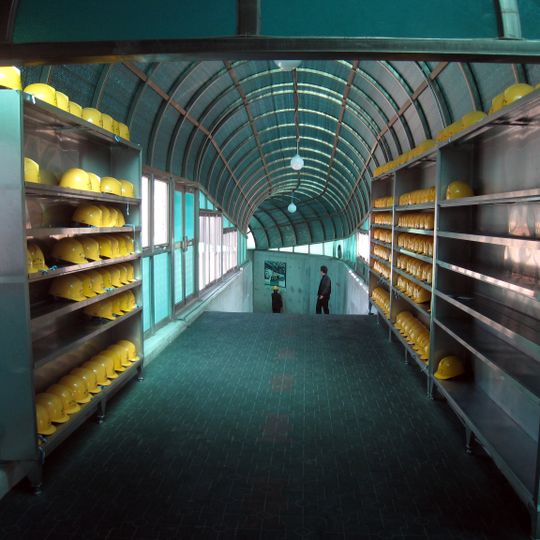
Visitors descend a long, steep ramp from a lobby with a gift shop, or ride a rubber-tyred train with padded seats facing forward and back. Photography is forbidden inside. The passage is low and narrow, so tall visitors must stoop; tourists may walk only as far as the third concrete barricade.
North Korea claimed the tunnel was a coal mine and had its walls blackened with soot to support the story. Visitors can see that the rock is granite, an igneous stone, while coal forms only in sedimentary rock; signs inside point this out.
The community of curious travelers
AroundUs brings together thousands of curated places, local tips, and hidden gems, enriched daily by 94,141 contributors worldwide.