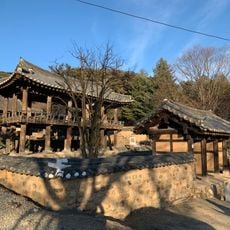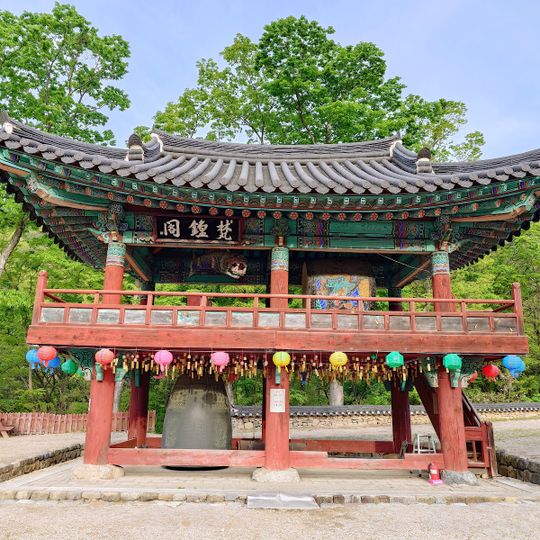
Bogyeongsa Temple, Buddhist temple in Pohang, South Korea
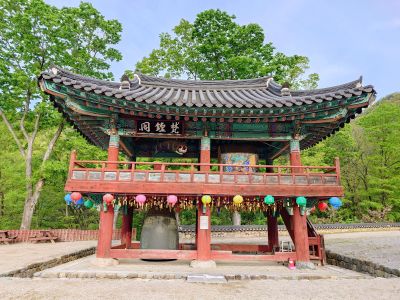
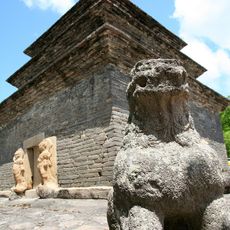
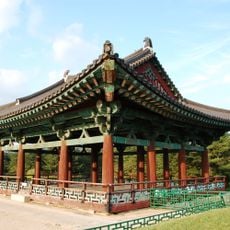
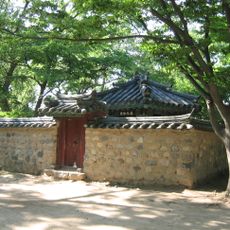
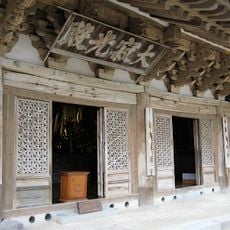
Bogyeongsa Temple is a Jogye Order Buddhist temple on the slopes of Mount Naeyeon in Songna-myeon, Pohang. Its precinct holds the main Daeungjeon hall, the Jeokgwangjeon hall with wooden lion carvings beside its pillars and at the Cheonwangmun gate, a five-storey stone pagoda from the Goryeo period, and a three-storey stupa dated 1023. Two old trifoliate orange trees stand to the right of the Cheonwangmun gate.
The monk Jimyeong founded the temple in 603, during the reign of King Jinpyeong of Silla, after returning from China with a prophecy and a eight-faced precious mirror. In 1214 the Seon master Wonjin Sunghyeong (1171–1221) took charge and expanded the temple to house his many students. Royal patronage and repeated rebuilding made it a large temple complex in the Joseon era.
The temple's name means "Temple of the Precious Mirror", after the eight-faced mirror (palmyeon bogyeong) that the monk Jimyeong is said to have received in China and buried here. The temple belongs to the Jogye Order as a branch of Bulguksa, the head temple of its 11th district. Two old trifoliate orange trees stand facing each other to the right of the Cheonwangmun gate, designated Gyeongsangbuk-do Monument No. 11.
To reach the temple, visitors follow hiking trails that lead to the entrance gates, where they first encounter the decorative Iljumun Gate before proceeding further. The mountain paths require moderate fitness, so sturdy shoes and plenty of water are important for a comfortable visit.
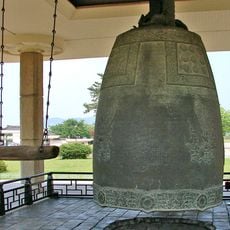
Behind the temple a valley stream forms thirteen waterfalls, the largest about 30 metres high. The sources place them in the valley behind the monastery, not in the temple courtyards, and give no name for a seventh fall. The temple keeps five national treasures, including a bronze bell cast under King Sukjong of Joseon.
The community of curious travelers
AroundUs brings together thousands of curated places, local tips, and hidden gems, enriched daily by 93,466 contributors worldwide.