Gyeongju National Museum, National museum in Gyeongju, South Korea
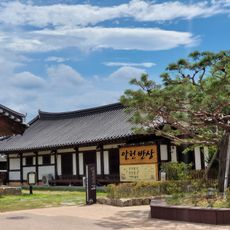
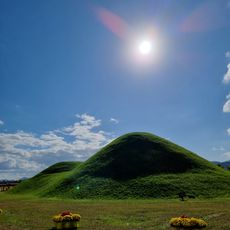
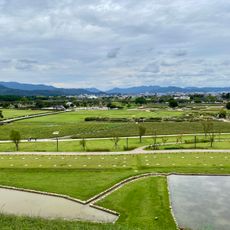
The Gyeongju National Museum occupies a site in Inwang-dong beside the royal tomb complex. Its main building, designed by Lee Hee-tae (1925–1981) and completed in 1975, is a pavilion-like structure with evenly spaced exterior columns, said to draw on Gyeonghoeru Pavilion at Gyeongbokgung. The Silla History Hall, the special exhibition hall and a bell pavilion for the Emille Bell stand on the grounds, with the brick-and-tile Wolji Hall (1982, architect Kim Sookun) and a 2002 art gallery added later.
The institution was founded in 1945 and received its current name in 1975 following construction of a new main building. The collection grew over decades as archaeologists discovered thousands of objects in the surrounding region.
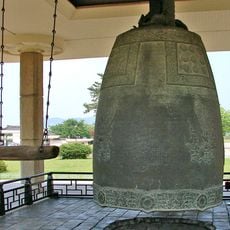
The Emille Bell, cast for King Seongdeok, is said to ring with the sound of a child sacrificed during its casting. Its move to the museum in 1975 drew many citizens who participated in the transfer. Silla gold crowns and objects from Anapji Pond and Hwangnyongsa Temple are also on display.
The museum is located near excavation sites and is open to visitors most days, with extended hours during the busy season. You should wear comfortable shoes and allow enough time to walk through the different exhibition areas.
The Emille Bell, cast in 771 for King Seongdeok, was moved here from Bongdeoksa in 1975; citizens took part in hauling it, and the bell pavilion was built for it. Its legend says a child was thrown into the molten bronze so the bell would ring true.
The community of curious travelers
AroundUs brings together thousands of curated places, local tips, and hidden gems, enriched daily by 93,483 contributors worldwide.