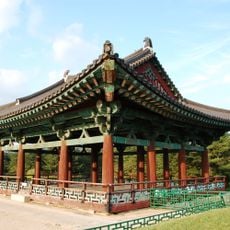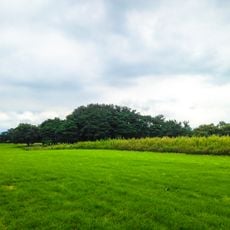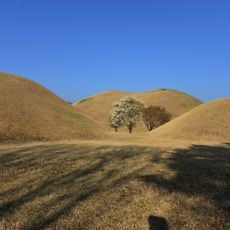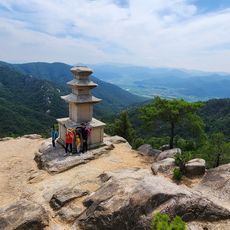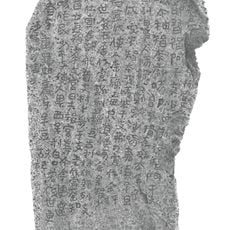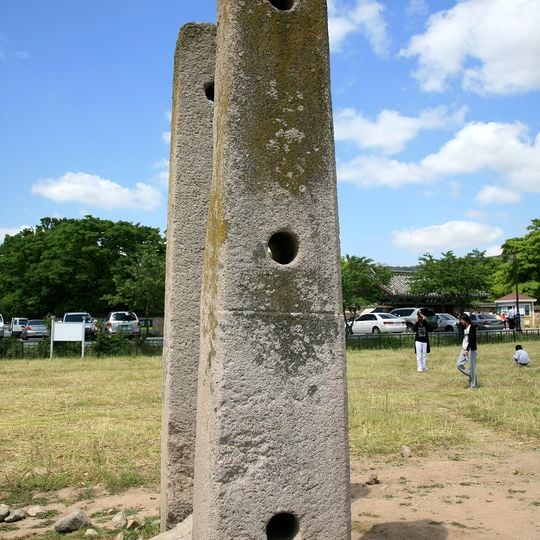
Hwangnyongsa, Buddhist temple ruins in Gyeongju, South Korea.
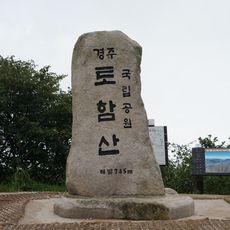
Hwangnyongsa is a temple site in Gyeongju where only the stone foundations remain, including the 565-square-metre base of a nine-storey wooden pagoda supported by eight pillars on each side. The site lies in a valley near Toham Mountain, about 140 metres from Bunhwangsa Temple, and its layout follows the 'three Halls-one Pagoda' arrangement, with the pagoda flanked by three main halls.
Construction began in 553 under King Jinheung, who intended a palace on the site until a dragon was seen there; the temple was completed in 644. Queen Seondeok commissioned the nine-story wooden pagoda, built by the Baekje architect Abiji with 200 artisans and finished in 645. Mongol invasions burned it in 1238.
The temple's name means "Emperor/Imperial Dragon Temple," after a dragon seen at the intended palace site. Hwangnyongsa held two of Silla's Three Treasures: the nine-story wooden pagoda and a 5-meter gilt-bronze Sakyamuni Buddha. In times of national crisis, kings had monks assemble there for the Baekgojwa rite and personally came to pray.
Information panels and diagrams at the site help explain what the original buildings were and what they were used for. The remains are spread across a ground level area that is straightforward to walk through.
The nine-story pagoda was built by the Baekje architect Abiji, who came with two hundred artisans after Baekje's defeat in the 660s. Its nine levels were said to represent the nine nations of East Asia and Silla's future conquest of them. The pagoda burned during the Mongol invasions in 1238.
The community of curious travelers
AroundUs brings together thousands of curated places, local tips, and hidden gems, enriched daily by 93,468 contributors worldwide.