Banwolseong, Royal palace site in Gyeongju, South Korea.
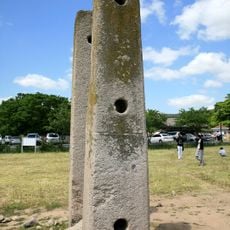
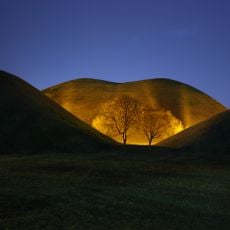
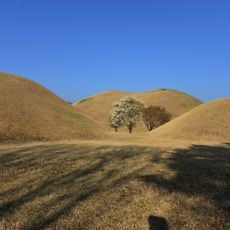
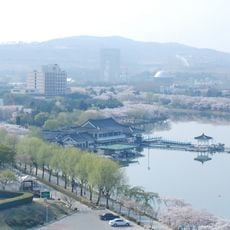
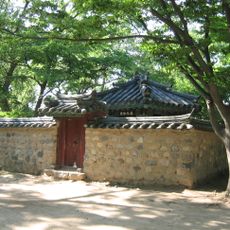
Banwolseong is a royal fortress site in the forested region around Gyeongju, where stone walls and foundations create a distinctive crescent shape across the landscape. The archaeological site displays the bases of structures and defensive works scattered across the grounds, outlining the former extent of the complex.
According to the Samguk Sagi, King Pasa built the fortress in 101 CE, but excavations from 2017 to 2021 show construction began in the mid-4th century and was completed in the early 5th. It served as the Silla royal palace until the 10th century. The stone icehouse Seokbinggo, moved here in 1741, replaced an earlier wooden structure under King Yeongjo.
The name Banwolseong means 'half-moon fortress' and describes the distinctive crescent shape of the ruins still visible in the forested landscape today. Visitors can observe how the site was integrated into its surroundings and the central role it held as a royal residence.
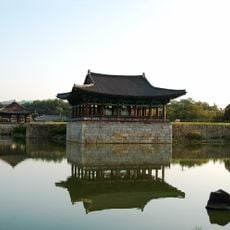
The ruins lie in Inwang-dong, Gyeongju, with Anapji Pond to the northwest and Gyeongju National Museum nearby. The Namcheon River runs along the south wall, and a gate site on the east once led to the Donggung Palace and Wolji Pond. The stone icehouse stands within the grounds.
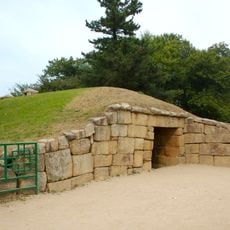
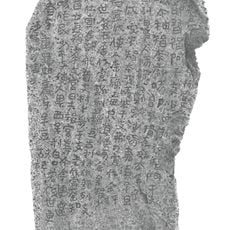
The stone icehouse Seokbinggo, Treasure No. 66, was moved to its present spot near the northern turret in 1741, during King Yeongjo's reign, when Jo Myeonggyeom replaced an older wooden structure with stone. It measures 18.8 m long, 2.4 m wide and 1.78 m high, with three ventilation ducts in its arched roof and a sloped floor that drained meltwater.
The community of curious travelers
AroundUs brings together thousands of curated places, local tips, and hidden gems, enriched daily by 94,032 contributors worldwide.