Tamgaly, Archaeological site in Almaty region, Kazakhstan
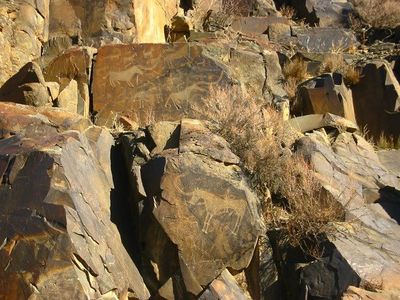
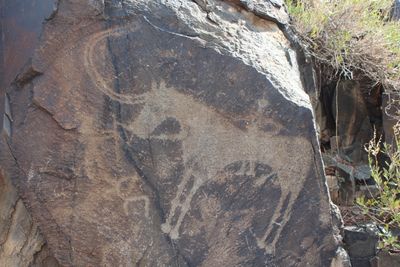
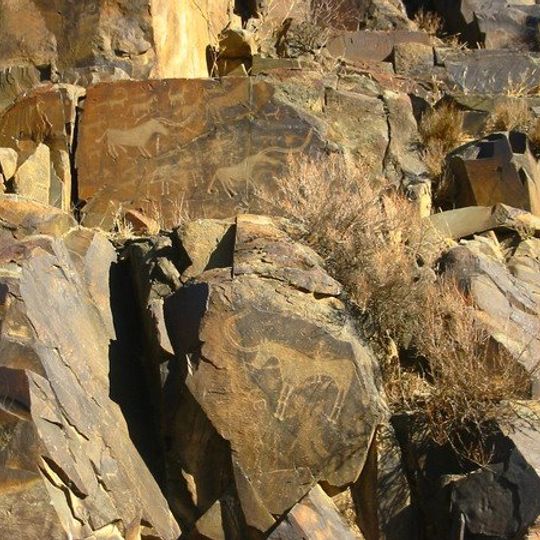
Tamgaly is an archaeological site and UNESCO World Heritage Site in the Almaty Region of Kazakhstan, known for its rock carvings spread across stone formations inside a hilly gorge. The site holds over 5,000 individual petroglyphs on different rock surfaces that visitors can walk between on foot.
The oldest carvings at Tamgaly go back to the middle Bronze Age, roughly 3,000 to 4,000 years ago, and were added to over many centuries with Iron Age images carved by later groups. The site was found in 1957 by archaeologist A.G. Maksimova, which led to its formal protection.
The rock panels show sun gods, warriors in ritual poses, and hunting scenes that give a direct sense of how Bronze Age people saw the world around them. Many of the carvings are at eye level, so visitors can look at them closely without any barrier.
Tamgaly sits about 170 kilometers (around 105 miles) northwest of Almaty and is most conveniently reached by joining a guided tour from the city. The terrain is uneven and hilly, so sturdy shoes and clothing suited to changing weather are a good idea.
The gorge around Tamgaly is home to a rare wild tulip, Tulipa regelii, which grows only on these rocky slopes and blooms in spring. It is listed in Kazakhstan's Red Book of endangered species, so visitors in the right season can spot both ancient carvings and a flower found nowhere else.
The community of curious travelers
AroundUs brings together thousands of curated places, local tips, and hidden gems, enriched daily by 91,815 contributors worldwide.