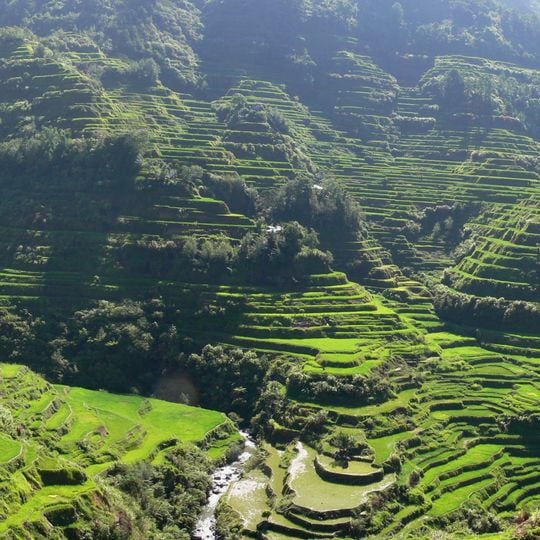
Banaue Rice Terraces

Log in to your account

AroundUs is a community-driven map of interesting places, built by curious explorers like you. It grows with every review, story, and photo you share.
Connect to save your favorite spots, contribute locations, and create personalized routes.
By continuing, you accept our Terms and Conditions and our Privacy Policy
Add to collection
Map
Suggest a change
Share

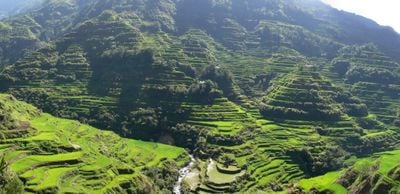
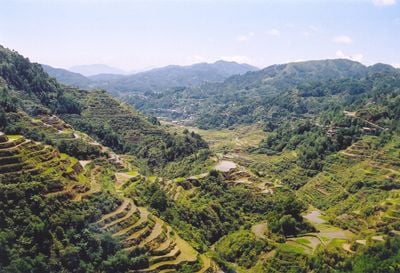
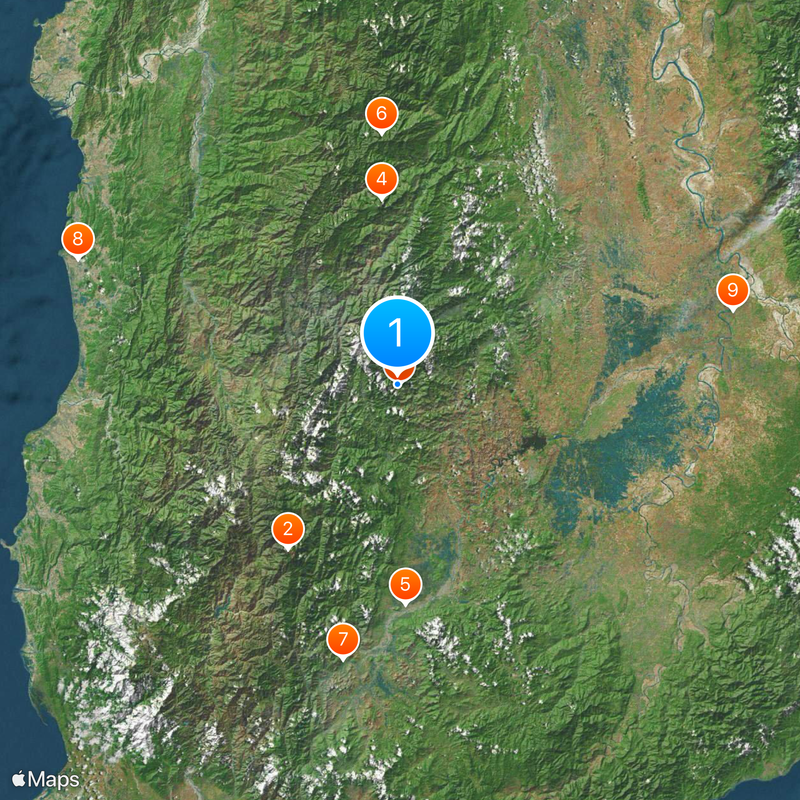
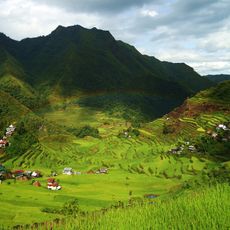
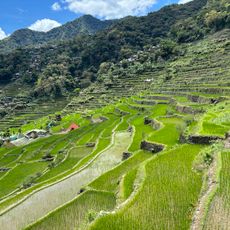
Banaue Rice Terraces, Agricultural terraces in Ifugao Province, Philippines.

The rice terraces span 4,000 square miles across mountains at 1,500 meters elevation, forming steps that extend for 12,500 miles through north-central Luzon.

The Ifugao people constructed these terraces using basic tools around the first century CE, demonstrating advanced engineering through an intricate irrigation system.

The cultivation of rice in these terraces involves specific ceremonies and community cooperation, following traditional methods passed through generations of Ifugao farmers.

Visitors can reach multiple viewpoints throughout the terraces, with the village of Batad offering direct access to the most maintained agricultural sections.

The terraces contain an ancient irrigation system that captures water from mountaintop forests, distributing it through precisely carved channels to each level.

Location: Banaue

Location: Ifugao

Part of: Rice Terraces of the Philippine Cordilleras

GPS coordinates: 16.93472,121.13472

Latest update: May 27, 2025 20:11

Southeast asia natural and cultural destinations

Southeast Asia extends from the volcanic craters of Sumatra to the limestone formations of northern Vietnam, combining geological features with centuries-old cultural sites. The region includes Lake Toba, one of the world's deepest crater lakes, the Banaue rice terraces that have been cultivated for over 2,000 years, and Komodo National Park, home to the world's largest living lizards. In Thailand, Wat Rong Khun draws visitors with its unconventional white architecture, while Luang Prabang in Laos blends French colonial buildings with Buddhist monasteries. The underwater world ranges from the biodiverse reefs surrounding Raja Ampat in West Papua to Sipadan Island off the coast of Sabah, where sea turtles and barracuda schools are common. The Gili Islands off Lombok provide access to coral reefs with no motorized vehicles on land. The Phong Nha-Ke Bang caves in Vietnam contain some of the world's largest cave systems, while the Chocolate Hills in Bohol form over 1,200 conical mounds. Less visited sites include the Plain of Jars in Laos with its stone vessels of unknown origin, the red lotus fields of Udon Thani in Thailand that bloom between December and February, and the abandoned Bokor Hill Station in Cambodia from the French colonial era. Mount Kinabalu rises to 13,435 feet (4,095 meters), making it the highest peak between the Himalayas and New Guinea. The region connects active volcanoes, tropical rainforests and temple complexes from different periods.

Satellite images showing incredible locations seen from the sky

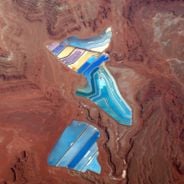
Satellite imagery has transformed how we view remote locations on Earth, offering perspectives on places that are often invisible or difficult to reach from ground level. This collection presents natural formations, artificial structures and historical sites from an aerial vantage point. From geological features like the circular Richat Structure in Mauritania's desert to ancient geoglyphs and modern engineering achievements, these images provide a distinct view of our planet's diversity. Locations documented include the geometric Nazca Lines in Peru, the pyramid structure of El Castillo in Mexico's Yucatán Peninsula and the Badlands Guardian in Alberta, a natural rock formation that resembles a head wearing headphones when seen from above. The collection also features Palm Jumeirah in Dubai, an artificial archipelago shaped like a palm tree, the vivid blue potash evaporation ponds in Utah, the pink waters of Lake Hillier in Western Australia and the volcanic island of Surtsey off Iceland. Additional examples include the Atacama Giant in Chile, a prehistoric geoglyph, the heart shaped Galesnjak island off Croatia's coast and the ship graveyard of the former Aral Sea in Uzbekistan, which documents the ecological consequences of human intervention.

Natural landmarks of the Philippines for photography

The Philippines display rice terraces in Ifugao mountains, coral reefs in Tubbataha National Park, and cave systems in Samar. Mayon Volcano shows its geometric shape, while Chocolate Hills of Bohol extend across the landscape. White sand beaches line the coasts of Boracay and Palawan.

Reviews

Visited this place? Tap the stars to rate it and share your experience / photos with the community! Try now! You can cancel it anytime.

« Banaue Rice Terraces - Agricultural terraces in Ifugao Province, Philippines » is provided by Around Us (aroundus.com). Images and texts are derived from Wikimedia project under a Creative Commons license. You are allowed to copy, distribute, and modify copies of this page, under the conditions set by the license, as long as this note is clearly visible.

Discover hidden gems everywhere you go!

From secret cafés to breathtaking viewpoints, skip the crowded tourist spots and find places that match your style. Our app makes it easy with voice search, smart filtering, route optimization, and insider tips from travelers worldwide. Download now for the complete mobile experience.

Around Us App Screenshot

A unique approach to discovering new places

Le Figaro

All the places worth exploring

France Info

A tailor-made excursion in just a few clicks

20 Minutes