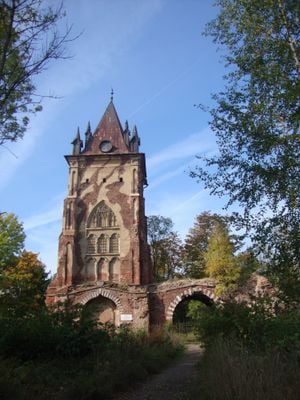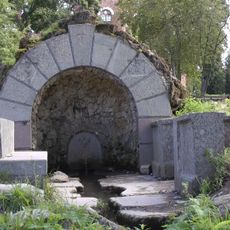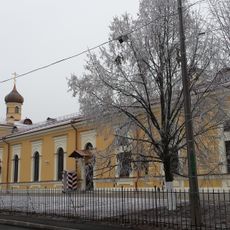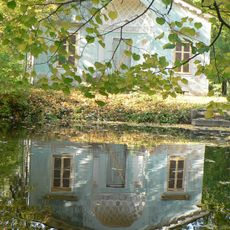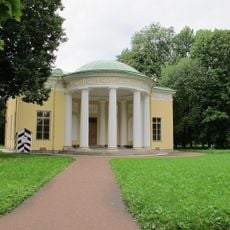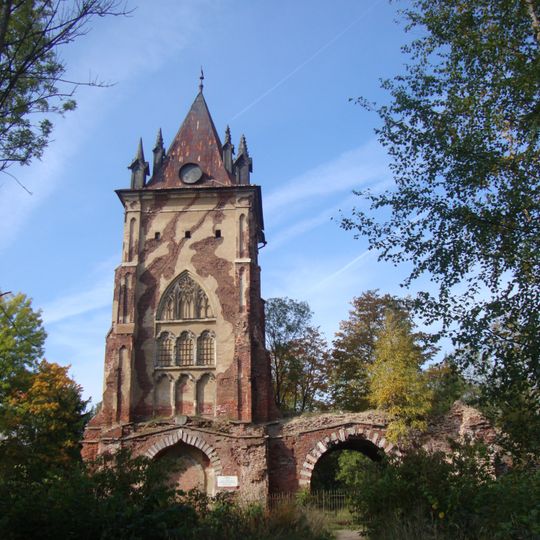
Shapel in Tsarskoe Selo, Gothic Revival pavilion in Alexander Park, Pushkin, Russia
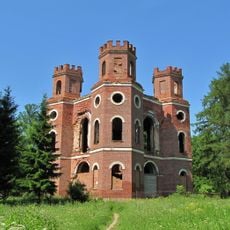
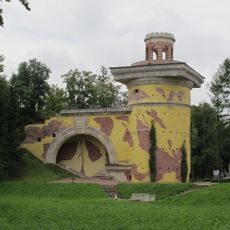
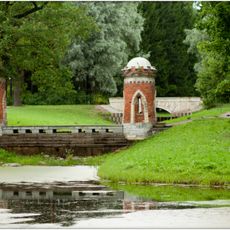
Shapel is a pavilion in Alexander Park, Pushkin, built in 1825–1828 by architect Adam Menelaws as an artificial Gothic ruin. A square western tower with corner buttresses and a tall hipped roof is linked by a broad arch to a half-ruined eastern tower. A narrow stone staircase leads to an open terrace and into a small, high vaulted room; the windows held colored stained glass with biblical scenes.
The chapel was built between 1825 and 1828 by architect Adam Menelaws as part of the imperial estate at Tsarskoe Selo. After suffering wartime damage, it stayed closed for decades and only reopened to visitors in 2018.
The pavilion's name comes from the French chapelle, chapel, though it was built as a park folly. Its windows held coloured stained glass showing scenes from the Bible, and inside stood angel figures by Vasily Demut-Malinovsky. A legend tells that members of the Aum Shinrikyo sect gathered here and painted secret signs and masks on the walls.
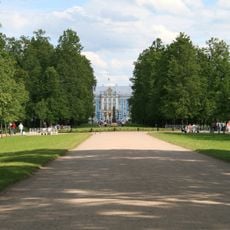
The chapel sits within Alexander Park and is reached on foot by following the park's main paths. It is worth setting aside enough time to also take in the other buildings scattered around the park during the same visit.
Empress Maria Feodorovna bought Dannecker's marble Christ for 100,000 rubles, first intending it for a Moscow church, then gave it to Alexander I. It stood in the pavilion until entering the Hermitage collection. In 1921 both tower entrances were reportedly walled up because thieves were hiding inside.
The community of curious travelers
AroundUs brings together thousands of curated places, local tips, and hidden gems, enriched daily by 94,570 contributors worldwide.