Qaryat al-Faw, Archaeological site in Riyadh Province, Saudi Arabia.
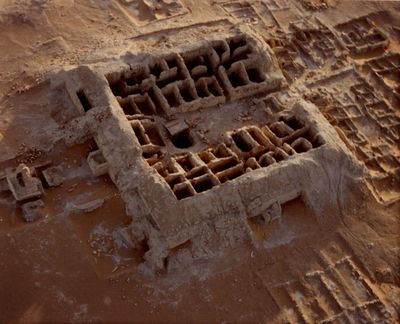
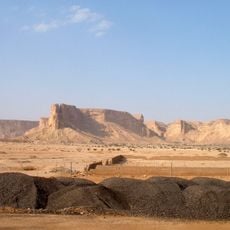
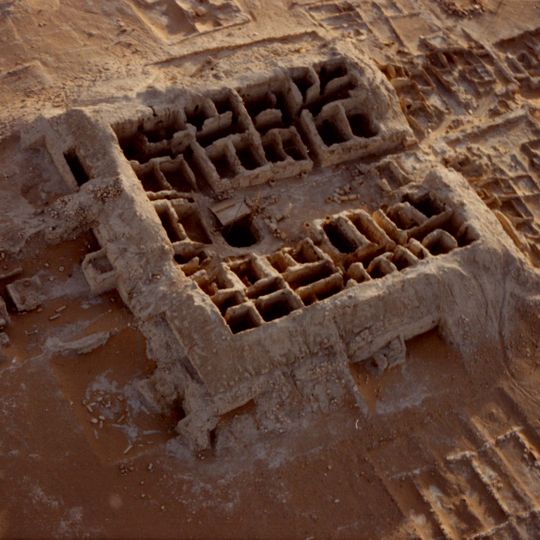
Qaryat al-Faw is an archaeological site whose ruins stand on a flat, sandy plain at the northwestern edge of the Empty Quarter. The visible structure is built of light tan stone or mud-brick: thick outer walls enclose a dense grid of small, deep rectangular compartments, some open to the sky and others partly filled with sand, with a flat open area inside the walls near one side. Excavations have uncovered houses, markets, temples, a royal palace and more than seventeen wells.
The settlement emerged as the capital of the Kinda kingdom and thrived between the 4th century BC and 4th century AD. During this period, it served as a major trading hub connecting different parts of the Arabian Peninsula.
The artifacts reveal how residents organized their daily lives, from trade activities in the marketplace to food preparation and storage. These objects show the skills and knowledge of people who lived in this desert region thousands of years ago.
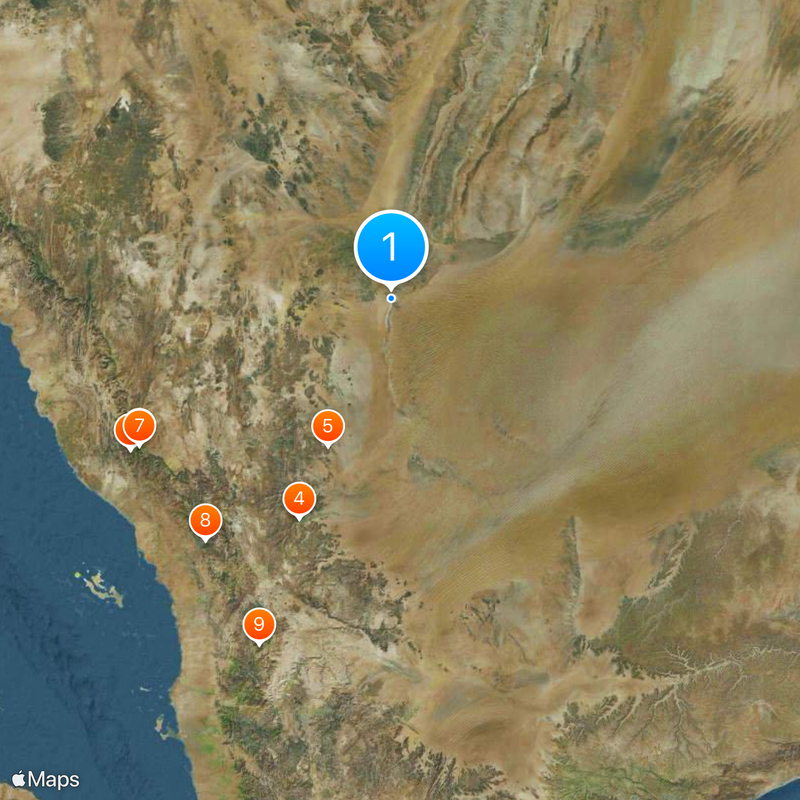
The site lies about 100 km south of Wadi ad-Dawasir and roughly 700 km southwest of Riyadh, reached by road through As Sulayyil governorate. Excavations have run since 1972, so parts of the ruins may be fenced or closed for work. Bring your own water and sun protection; there is no shade among the walls.
The Temple of Shams held a mrzḥ, a ritual banqueting room whose frescoes show reclining banqueters, vine scrolls, erotes and chariots in Roman dress. It is the easternmost mrzḥ attested in inscriptions, and the painting style matches Egyptian Fayum portraits of the 1st century CE.
The community of curious travelers
AroundUs brings together thousands of curated places, local tips, and hidden gems, enriched daily by 94,046 contributors worldwide.