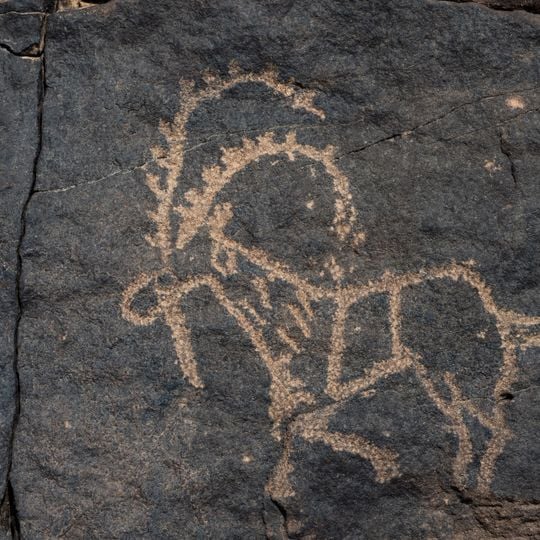
Bir Hima Rock Petroglyphs and Inscriptions, Rock art complex in Najran Province, Saudi Arabia.
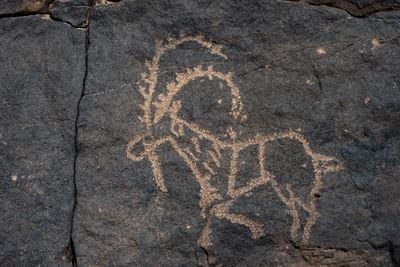
Bir Hima Rock Petroglyphs presents over 550 rock art panels featuring thousands of engravings depicting animals, plants, and human activities spread across multiple locations. The engravings form a connected system of sites within the region.
The engravings were made between roughly 7000 and 1000 BC, and monumental inscriptions followed over the next millennia. The wells of Bir Hima were the last water stop for caravans heading north through the desert and the first for those coming south. In 1951 the Philby-Ryckmans-Lippens expedition recorded 12,000 rock drawings along its route; the area was inscribed as a UNESCO World Heritage Site on 24 July 2021.
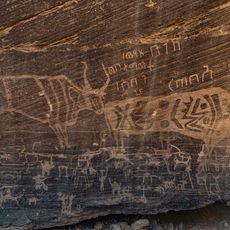
Among the inscriptions is a Musnad text on Jabal Hamata recording the Himyarite king Yusuf Asar Yathar's victory over the Aksumites in 518 AD, with 12,500 killed and 11,000 taken captive. A rock panel about 3 metres high and 4 metres wide shows a dancing woman, a musician and a warrior, dating to the Bronze or Iron Age.
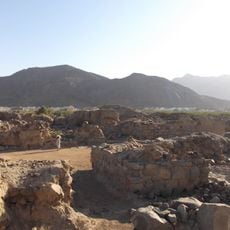
The site is located approximately 200 kilometers north of Najran city and was historically sustained by ancient wells providing water for passing caravans. Visitors should prepare for the dry landscape and bring appropriate gear for desert exploration.
Among the thousands of carvings are over a thousand distinct wusum, the signatures of individual artists or their tribes. Researcher Majeed Khan speculated that these marks may have been a starting point for the region's first writing systems.
The community of curious travelers
AroundUs brings together thousands of curated places, local tips, and hidden gems, enriched daily by 93,381 contributors worldwide.