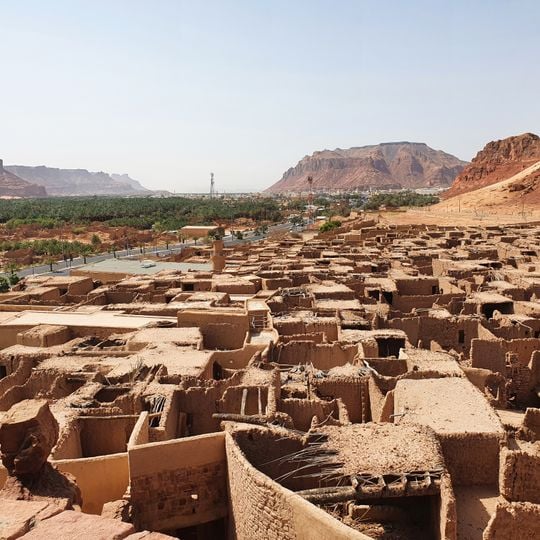
Al-Ula Old Town, Archaeological site in Al-Ula, Saudi Arabia
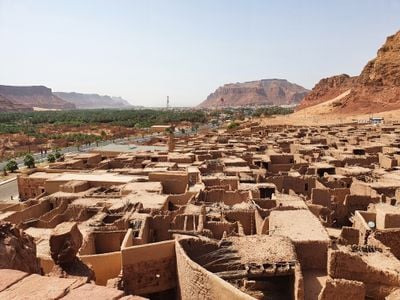
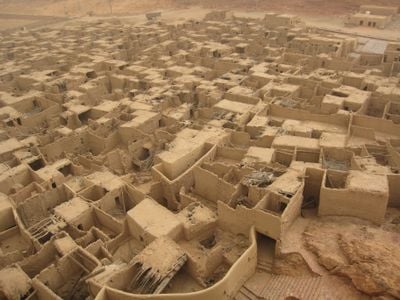
Al-Ula Old Town, known as al-Dirah, is an archaeological site of about 870 mud-brick residential units packed so tightly that the settlement reads as a single building. More than 400 shops and five town squares sit among them, linked by narrow winding alleys. It is divided into al-Shqīq in the north and al-Ḥilf in the south, and the Mousa Bin Nusayr castle stands among the remains.
This settlement began in the 12th century along routes used for incense and spice trade. It gained importance later as a stop for pilgrims traveling from Damascus toward Mecca, becoming a hub for both merchant and religious journeys.
The town is called al-Dirah, meaning "town" in Arabic, and its 870 homes, more than 400 shops and five town squares are packed so tightly that the whole settlement reads as one building. The narrow winding alleys divide it into two districts, al-Shqīq in the north and al-Ḥilf in the south. Tantora, a solar timekeeping device, once marked the start of the farming season and the timing of water distribution; the Winter at Tantora Festival takes its name from it.
The site lies 22 km from Hegra, and its 870 residential units are joined by narrow, winding alleys, so expect uneven ground underfoot. The town splits into two districts, al-Shqīq in the north and al-Ḥilf in the south, which helps orientation. Much of the area is under restoration, so some lanes and structures may be closed off.
The Tantora, a historic solar timekeeping device, marked the start of the agricultural season and guided daily life, seasonal farming cycles and the timing of water distribution. It gives its name to the Winter at Tantora Festival.
The community of curious travelers
AroundUs brings together thousands of curated places, local tips, and hidden gems, enriched daily by 93,514 contributors worldwide.