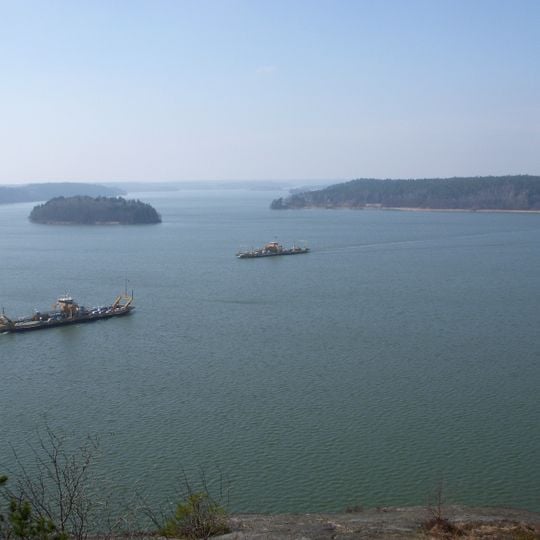
Mälaren, Freshwater lake in Stockholm County, Sweden.
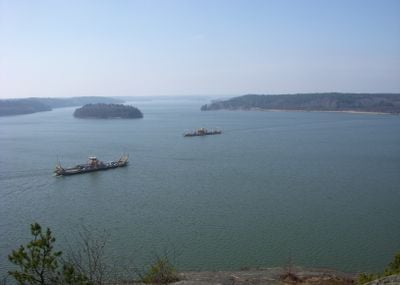
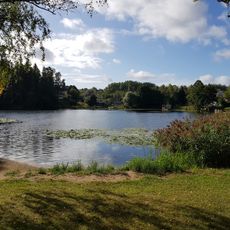
Lake Mälaren is a large freshwater body in central Sweden that spreads across multiple regions and contains many islands of varying sizes. Its waters form a complex network of bays and passages connecting different parts of the surrounding landscape.
During the Viking Age, Mälaren was still a bay of the Baltic Sea, and seagoing vessels could sail far inland. Post-glacial rebound made the Södertälje canal and the mouth of Riddarfjärden bay so shallow by about 1200 that ships had to unload cargoes near the entrances, and the bay progressively became a lake. This decline contributed to the fall of Birka and the founding of Stockholm at the Riddarfjärden choke point.
The name Mälaren comes from Old Norse mælir, meaning gravel, first recorded in writing in the 1320s. Crayfish are of great cultural and economic importance in Sweden, and crayfish parties are a long-standing annual tradition; Mälaren was the first lake in Sweden affected by crayfish plague.
Mälaren drains into the Baltic through Norrström and Söderström around Stadsholmen, and through the Södertälje Canal and Hammarbyleden. Dams at Riksbron are lowered only when the sea stands higher than the lake, keeping brackish water out. The narrowest crossing is at Kvicksundsbron.
Norse myth in the Prose Edda says the goddess Gefjon ploughed up Zealand from Sweden with giant oxen, leaving the lake; the text adds that its inlets match Zealand's headlands, though modern maps fit Lake Vänern better.
The community of curious travelers
AroundUs brings together thousands of curated places, local tips, and hidden gems, enriched daily by 93,469 contributors worldwide.