Diplomatstaden, Historic residential district in Östermalm, Stockholm, Sweden.
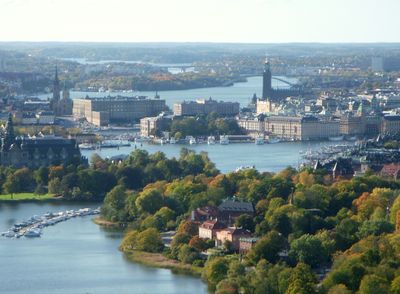
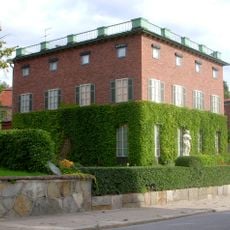
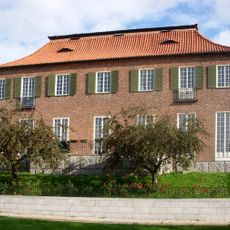
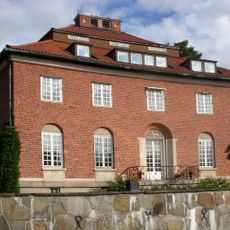
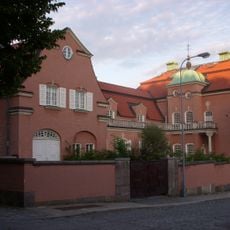
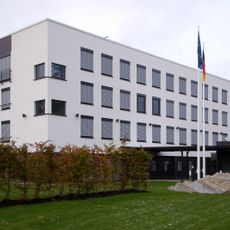
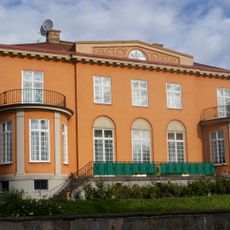
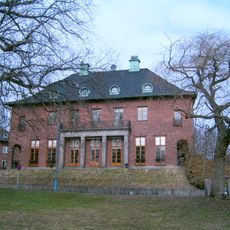
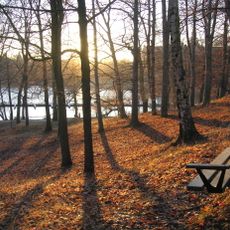
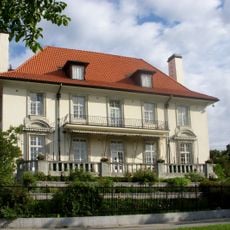
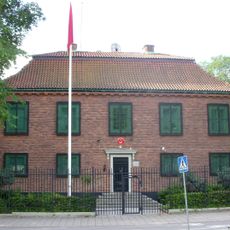
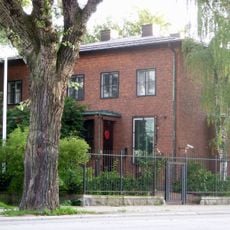
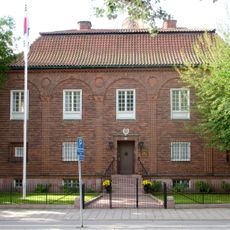
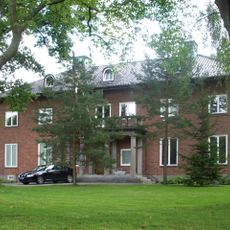
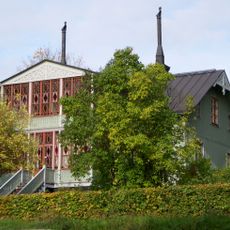
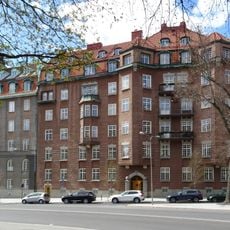
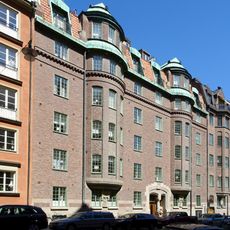
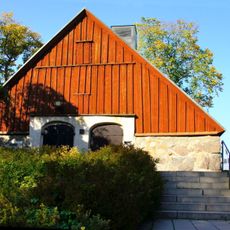
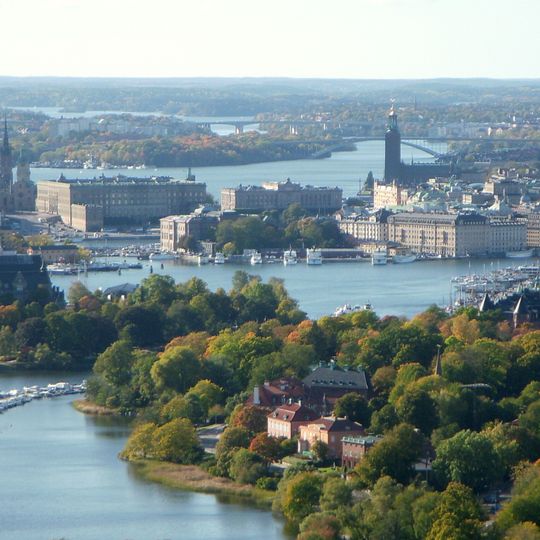
Diplomatstaden is a neighbourhood in Östermalm, Stockholm, made up of twelve palace-like villas and townhouses from the 1910s and 1920s, plus the English Church. Per Olof Hallman's 1911–1914 plan set the villas in a fan-shaped semicircle around the church, most facing the water of Djurgårdsbrunnsviken. Red brick was the prescribed facade material, though the British minister's villa is near-white rendered and the Tillberg villa old-rose.
Per Olof Hallman drew up the city plan for the villa district in 1911 and 1914, specifying red brick facades and much of the buildings' exterior form. Despite the diplomatic name, recorded in writing by 1919, eleven of the twelve villas were built by wealthy private individuals; only the British residence was built for a state. The first villa was banker Philip Geber's at Nobelgatan 5, designed by Ragnar Östberg in 1913.
The name Diplomatstaden was already in use by 1919, though eleven of the twelve villas were built by wealthy private individuals such as Ernst Trygger and Erik Åkerlund. The British legation's villa at Nobelgatan 7, designed by Richard Allison in 1915, was the exception. Street names like Laboratoriegatan recall the gunpowder laboratory that exploded here in 1716.
The neighborhood is well connected by public transport and walking distance from Stockholm's main attractions. A leisurely stroll through the tree-lined streets is the best way to see the villas up close and notice their individual details.
No two villas are exactly alike, each adapted to fit its irregular plot while maintaining the neighborhood's overall style. This flexibility meant that waterfront properties could open onto spacious gardens while street-facing homes were shielded by walls.
The community of curious travelers
AroundUs brings together thousands of curated places, local tips, and hidden gems, enriched daily by 94,054 contributors worldwide.