Kyzyl-Koba, Cave system in Crimea Peninsula
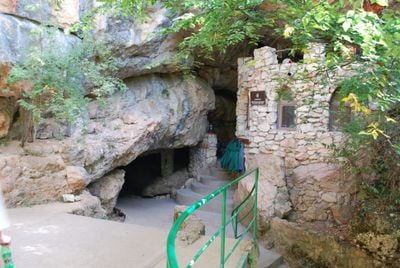
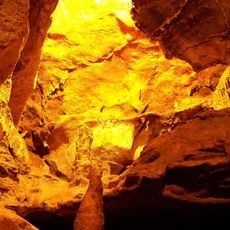
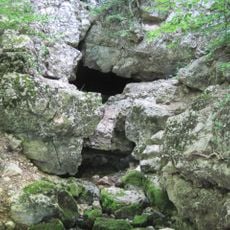
Kyzyl-Koba is a source cave in the Crimean Mountains on the slope of the Dolgoruk Yayla, 3 km from Perevalnoye. Its system of stacked levels is linked by passages, pits and siphons, and the underground Kizilkobinka flows through the lowest level, Kharanykh-Koba, where an 8-metre stalactite about 8,000 years old hangs. The entrance arch of pale grey and beige stone holds a concrete floor, steps and a stone wall with a sign reading "ПЕЩЕРА".
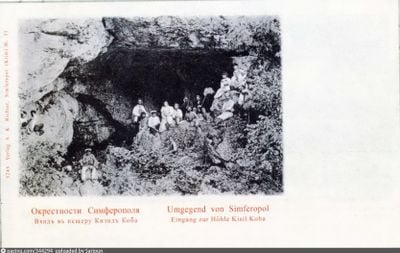
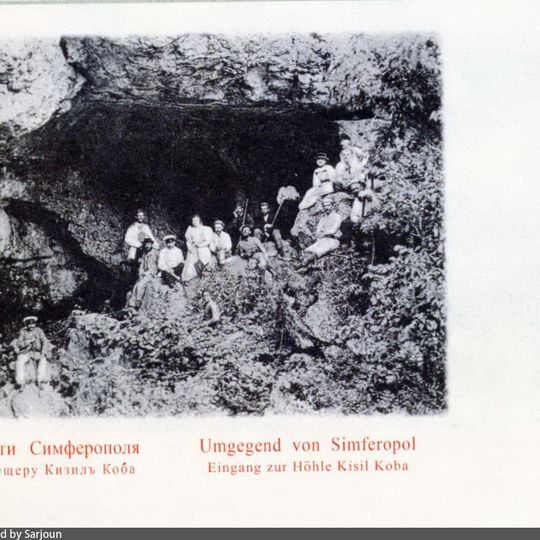
Archaeological work at Kyzyl-Koba began in 1879, when Konstantin Merezhkovsky found a Stone Age flint workshop on the slope of the Dolgoruky Yayla, with about 1,000 tools, 100 cores and 5,000 flakes. In 1905–1907, at the initiative of Prince Dolgorukov, natural tuff stone was quarried in the cave. Systematic study resumed in 1958 under Boris Ivanov's karst expedition.
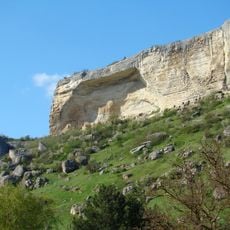
The name Kyzyl-Koba comes from Turkic kizil (red) and koba (cave), after the reddish-brown Upper Jurassic limestone the cave lies in. The nearby cliffs of Kyzyl Qaya are tinted by iron oxides, sometimes pink. The cave mouth is marked by a stone wall with a dark sign bearing gold lettering, including the word "ПЕЩЕРА".
The system offers two different route options: a one-hour guided tour covering about 500 meters of developed pathways or a four-hour more challenging route for experienced explorers. Visitors should choose in advance based on fitness level and caving experience to ensure the best fit.
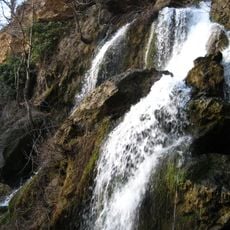
The cave system contains the underground river Kizilkobinka, which emerges at the surface to form the Su-Uchkhan waterfall. This transition from subterranean to surface water flow is one of the complex's most remarkable features.
The community of curious travelers
AroundUs brings together thousands of curated places, local tips, and hidden gems, enriched daily by 94,478 contributors worldwide.