Pakhkal-Kaya, Mountain and fortified monastery ruins in Crimea
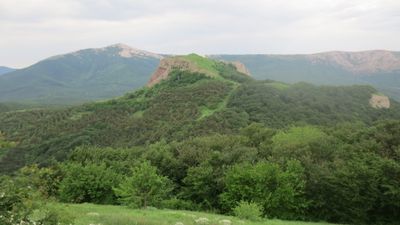
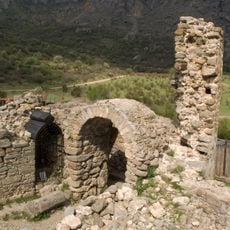
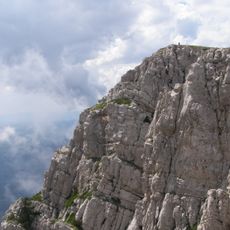
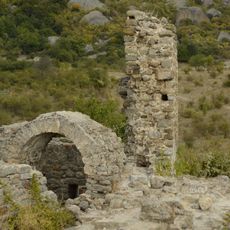
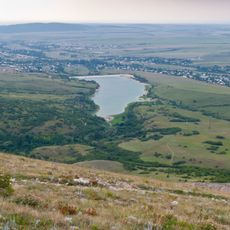
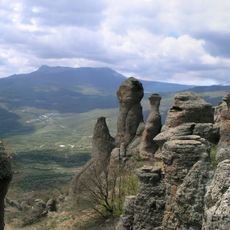
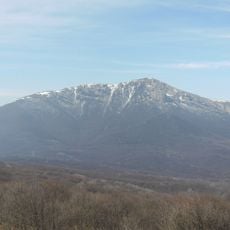
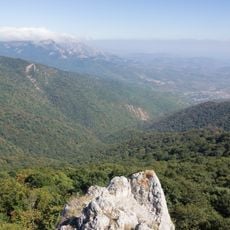
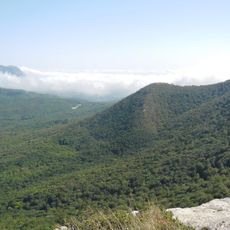
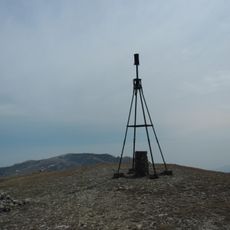
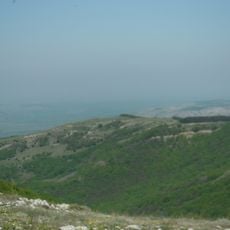
Pakhkal-Kaya is a fortified monastery ruin on a treeless 1,138 m summit between the Chatyr-Dag and Demerdzhi massifs, east of the Angarsky Pass. Its north side was protected by a wall of large conglomerate blocks set in lime mortar, with a gate reached by an ancient road. Inside are the foundations of a single-apse, single-nave church of about 70 m² and several small buildings.
Oleg Dombrovsky first studied the ruins in 1966 and proposed that the fortified monastery guarded the ancient route from the steppes through Angara-Bogaz to the southern coast of Crimea. Excavations in the 2010s found a single-nave church with one apse of about 70 m², possibly built over a pagan sanctuary of the 3rd–5th centuries. The settlement existed in the 9th–10th centuries and again from the 13th century until the Ottoman conquest of Crimea in 1475.
The name Pakhkal-Kaya comes from the mountain; the fortified monastery also appears in sources as Pangalos, Endek-Kaya and Indek-Dag. Archaeologists link the site to the route through the Angara-Bogaz pass to the southern coast, and the water source was probably the Indek-Chokrak spring at the foot of the cliff. Finds from the excavation are typical of medieval Crimean monasteries.
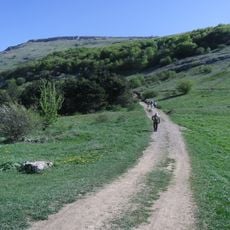
The path up the mountain to the ruins is narrow and rocky, requiring sturdy footwear and careful footing on uneven ground. Bring plenty of water and allow time to explore the site slowly, as there are no shops or facilities nearby to purchase supplies.
The large conglomerate blocks of the defensive wall were probably carted away by soldiers building the road to the South Coast in 1824–1826, which is why no wall survives today. Excavations in the 2010s found only the church, a single-apse, single-nave building of about 70 m², and suggested an earlier pagan shrine of the 3rd–5th centuries stood on the same spot.
The community of curious travelers
AroundUs brings together thousands of curated places, local tips, and hidden gems, enriched daily by 94,531 contributors worldwide.