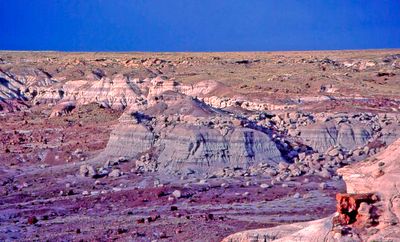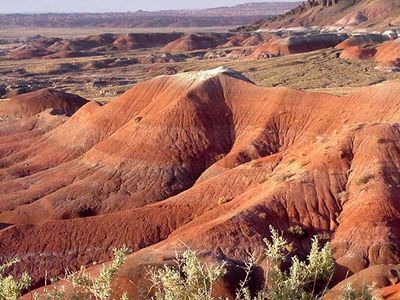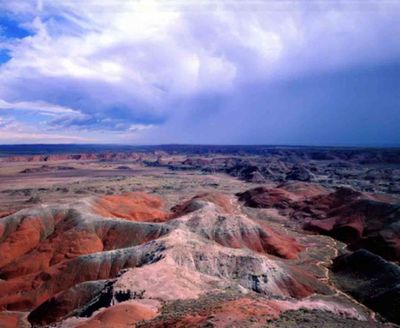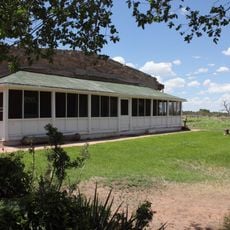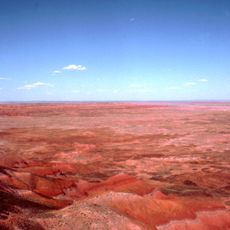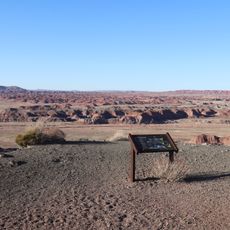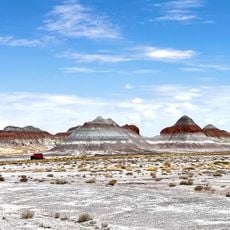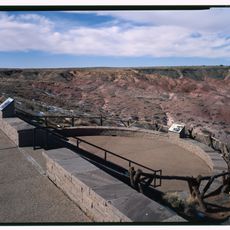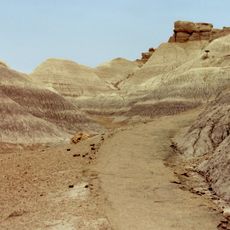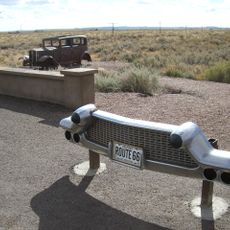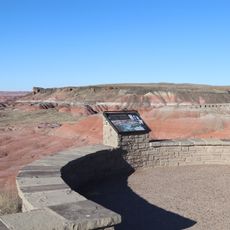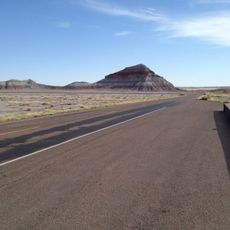
Painted Desert, Desert formation in Coconino County, United States.
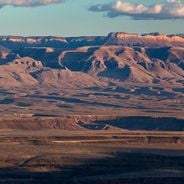
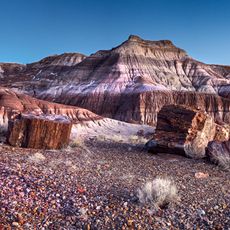
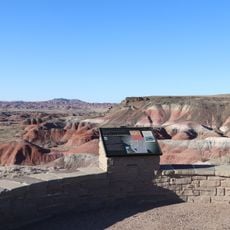
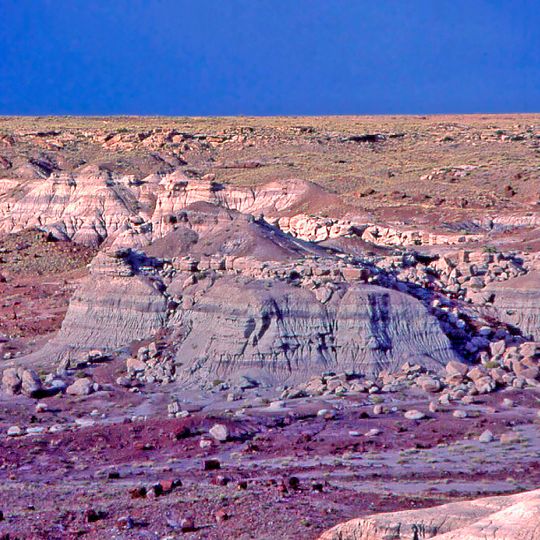
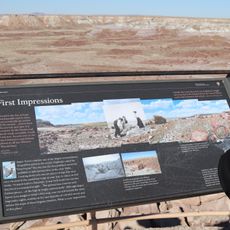
The Painted Desert extends along the Little Colorado River, featuring sedimentary rock layers in red, orange, and purple mineral deposits.
Spanish explorers named this desert in the 16th century after observing the multicolored bands of sedimentary rocks across the landscape.
The Navajo Nation maintains territories within the Painted Desert boundaries, continuing their ancestral connection to this land for thousands of years.
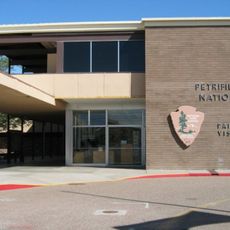
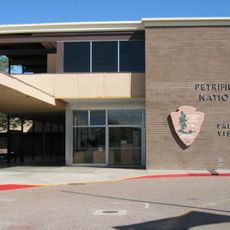
Visitors access the desert through the Petrified Forest National Park, which offers designated hiking trails and observation points.
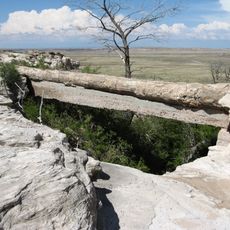
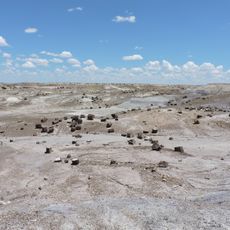
The desert's geological formations contain fossilized wood fragments and prehistoric plant materials dating back 225 million years.
Location: Coconino County
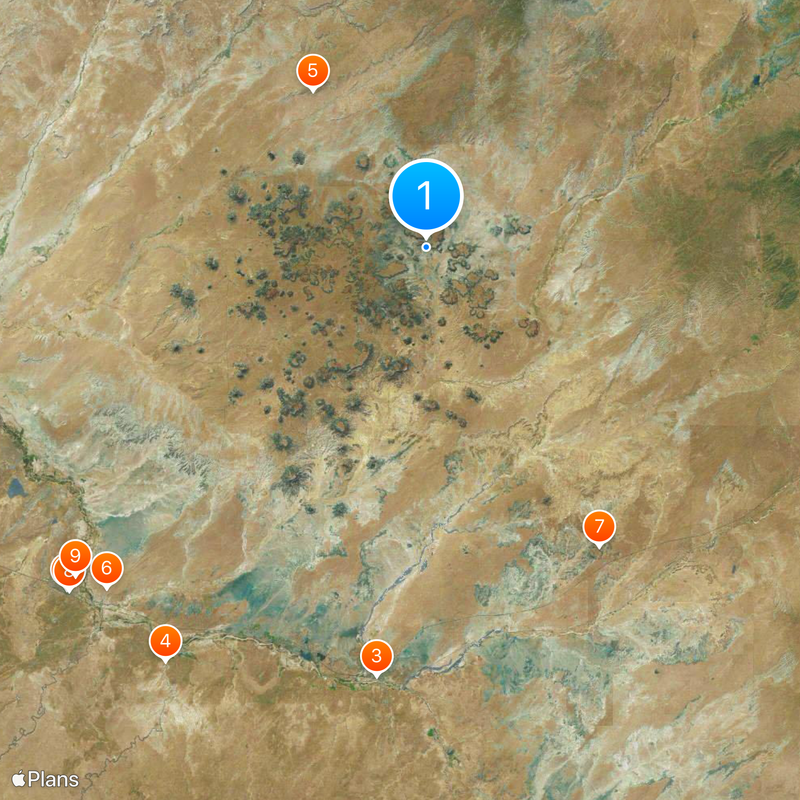
GPS coordinates: 35.50031,-110.08400
Latest update: May 28, 2025 18:14
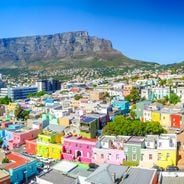
Earth displays its color range at numerous sites, from geological formations to human-built environments. The selection includes locations on six continents, where natural processes or cultural traditions have resulted in prominent visual displays. The Danxia mountains in China's Gansu province show layered sedimentary rock formations in reds, oranges and yellows, while Arizona's Painted Desert derives its colors from iron oxides and other minerals. Yellowstone's Grand Prismatic Spring owes its concentric bands of color to heat-loving bacteria that thrive in different temperature zones of the water. The Great Blue Hole off the coast of Belize reaches a depth of 407 feet (124 meters), providing a deep blue contrast to the surrounding turquoise shallows. Various communities have marked their built environment with distinctive color palettes. Chefchaouen in Morocco's Rif Mountains displays blue walls throughout its medina. Jodhpur in Rajasthan uses blue paint that originally marked Brahmin residences. Cape Town's Bo-Kaap presents houses in yellows, pinks, greens and blues, while Buenos Aires' La Boca neighborhood has corrugated metal facades in bright colors. Copenhagen's Nyhavn shows 17th and 18th century townhouses along the canal in reds, oranges, yellows and other hues. Scarborough's beach huts on the English coast offer a smaller scale of residential color. Water features contribute to the variety. China's Jiuzhaigou lakes display blues and greens due to calcium carbonate and algae. Tanzania's Lake Natron turns red to pink because of microorganisms living in its alkaline water. Pena Palace on a hilltop near Sintra, Portugal, combines yellow and red facades. Copacabana on Bolivia's Lake Titicaca offers whitewashed buildings with colorful accents. Hitsujiyama Park in Chichibu presents fields of phlox in pinks, whites and purples, while Kitakyushu's Kawachi Fuji Gardens feature wisteria tunnels. Even Longyearbyen on Svalbard displays colored wooden houses against Arctic landscapes.
The southwestern United States encompasses desert landscapes, sandstone formations and archaeological sites from several pre-Columbian cultures. The region spans Utah, Arizona, New Mexico and Colorado, featuring geological structures shaped over millions of years by wind and water erosion. National parks such as Canyonlands and Capitol Reef display canyons, mesas and rock spires in shades of red, orange and ochre. The area preserves evidence of the Ancestral Puebloans, who built cliff dwellings and communal structures between the 12th and 14th centuries. Sites like Bandelier National Monument and Gila Cliff Dwellings provide access to these habitations. Chaco Culture National Historical Park documents a pre-Hispanic trading center with multistory stone complexes. Petroglyphs at locations such as Three Rivers and the petrified trees of Petrified Forest National Park offer additional historical records. The Navajo Nation administers Monument Valley and the Navajo Zoo, while Hubbell Trading Post operates as a functioning 19th-century trading post. Volcanic features mark Sunset Crater and El Malpais, while White Sands covers more than 275 square miles (700 square kilometers) of gypsum dunes. Glen Canyon and the man-made Lake Cochiti provide water access in this largely arid region. Elevation differences range from the Organ Pipe Cactus Desert to Great Basin National Park with its ridges above 13,000 feet (3,900 meters).
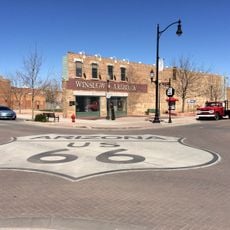
Standin' on the Corner Park
77 km
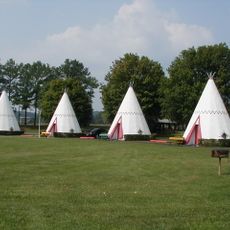
Wigwam Motel
67 km
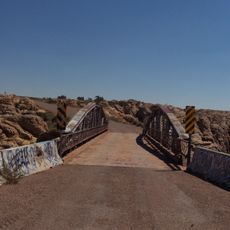
Chevelon Creek Bridge
75.9 km
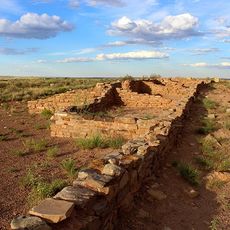
Awatovi Ruins
29.9 km
Homolovi State Park
72.5 km
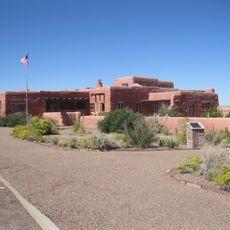
Painted Desert Inn
53.6 km
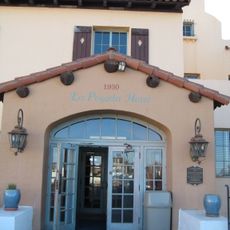
La Posada Historic District
76.9 km
Brigham City
74.7 km
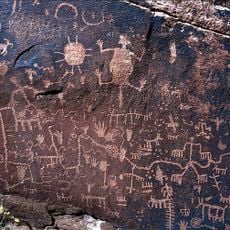
Newspaper Rock Petroglyphs Archeological District
65.3 km
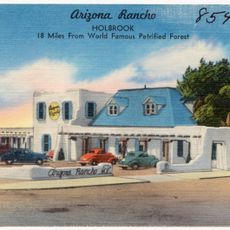
Arizona Rancho
67.3 km
Puerco Ruin and Petroglyphs
64.2 km
Painted Desert Community Complex Historic District
55.4 km
Agate Bridge
72.7 km
Jasper Forest
72.2 km
Crystal Forest
75.6 km
Hubbell Home
52.9 km
Petrified Forest National Wilderness Area
47.8 km
The Tepees South Pullout
67.9 km
Chinde Point
52.9 km
Blue Mesa Trail
69.1 km
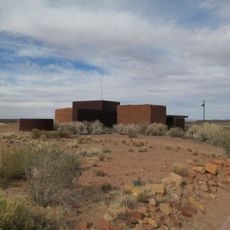
Painted Desert Visitor Center
55.7 km
Tiponi Point
55.1 km
Jasper Forest Viewpoint
72.6 km
Whipple Point
54.9 km
Route 66 Pullout
56 km
Tawa Point
54.1 km
Lacey Point
55 km
The Tepees North Pullout
67.9 kmReviews
Visited this place? Tap the stars to rate it and share your experience / photos with the community! Try now! You can cancel it anytime.
Discover hidden gems everywhere you go!
From secret cafés to breathtaking viewpoints, skip the crowded tourist spots and find places that match your style. Our app makes it easy with voice search, smart filtering, route optimization, and insider tips from travelers worldwide. Download now for the complete mobile experience.
A unique approach to discovering new places❞
— Le Figaro
All the places worth exploring❞
— France Info
A tailor-made excursion in just a few clicks❞
— 20 Minutes