Lake Sakakawea, Artificial reservoir in North Dakota, United States
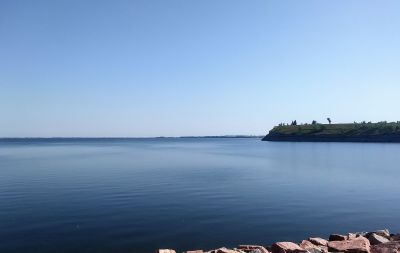
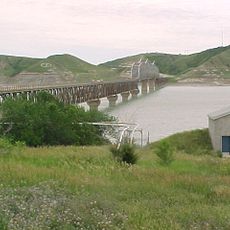
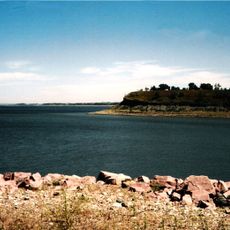
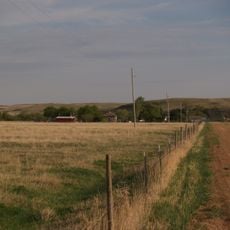
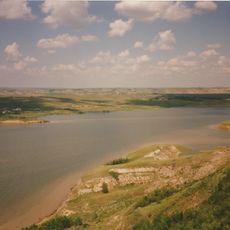
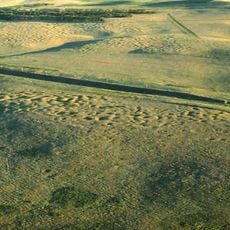
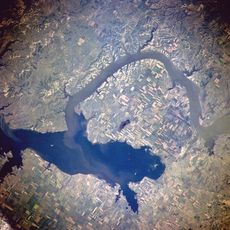
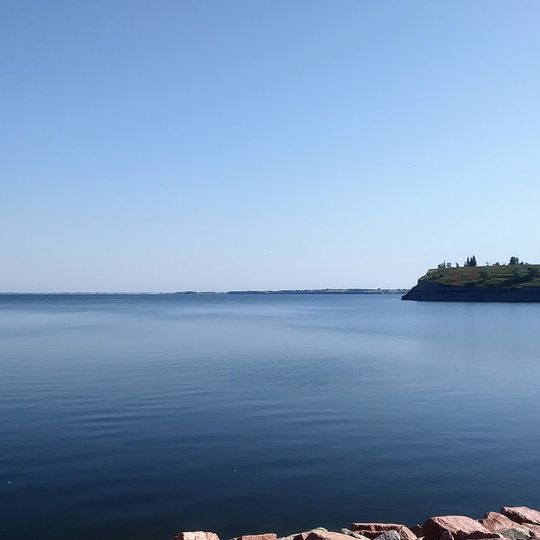
Lake Sakakawea is an artificial reservoir in North Dakota created by the Garrison Dam on the Missouri River. The shoreline winds through rolling prairie hills, forming bays, peninsulas and long arms that create thousands of kilometers of waterfront across the central part of the state.
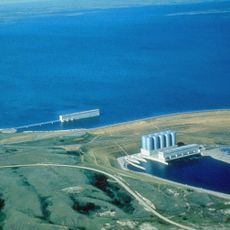
Garrison Dam was begun in 1946 as the first part of the Pick-Sloan Missouri Basin Program and dedicated by President Dwight D. Eisenhower in June 1953; earthwork ended in 1954 and the remaining construction in 1956. The reservoir flooded more than 25 percent of the Fort Berthold Reservation, about 617 square kilometers, and around 80 percent of tribal members had to relocate, losing 94 percent of their agricultural land. The towns of Van Hook, Old Sanish and Elbowoods were inundated.
The reservoir is named for Sacagawea, the Shoshone-Hidatsa woman who accompanied the Lewis and Clark Expedition; she was not from this region. The three campground sections of Lake Sakakawea State Park carry the names of Fort Berthold villages lost to the lake: Van Hook, Sanish and Elbowoods.
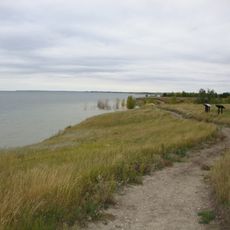
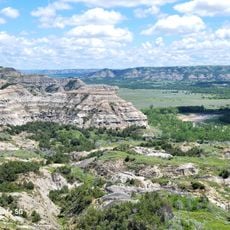
Lake Sakakawea State Park offers boat ramps, campsites and fishing spots along the southern shore. Trails wind through hills above the water, giving views over the wide surface and surrounding prairie grassland.
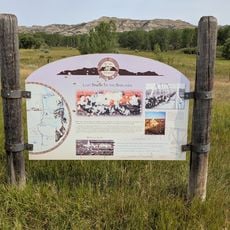
The North Country National Scenic Trail begins at this reservoir and runs roughly 7700 kilometers (4800 miles) east to Vermont. This route crosses eight states and ranks among the longest hiking trails in the country, with its western terminus resting here at the water's edge.
The community of curious travelers
AroundUs brings together thousands of curated places, local tips, and hidden gems, enriched daily by 94,726 contributors worldwide.