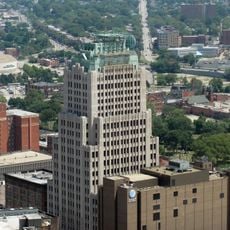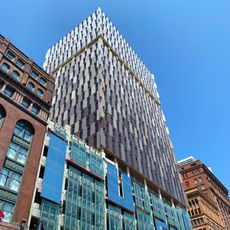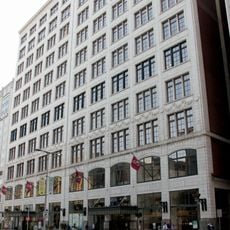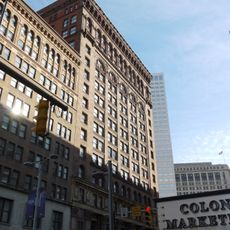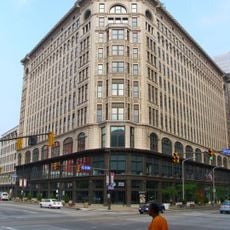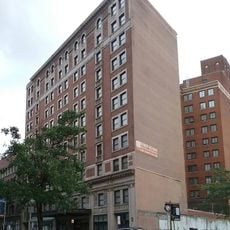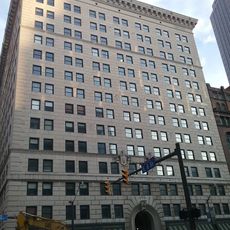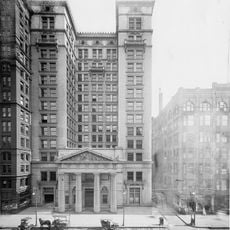
Caxton Building, comercial building in Cleveland, Ohio
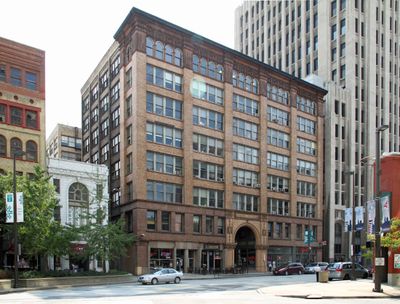
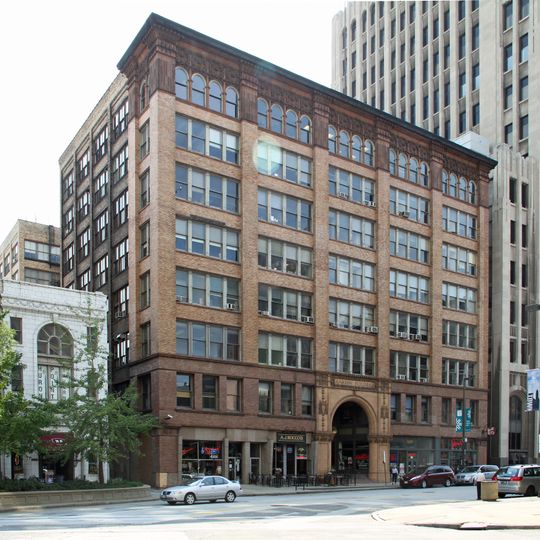
The Caxton Building is an eight-story office structure in Cleveland built between 1901 and 1903 with steel framing. Its floors were specially reinforced to support up to 300 pounds per square foot, designed specifically to accommodate heavy printing presses and industrial equipment.
Designed by architect Frank S. Barnum and completed in 1903, the building was backed by Ambrose Swasey, a construction company leader who championed engineering innovation. Originally housing printing and graphic arts businesses, it later became home to the World Publishing Company, which produced Webster's New World Dictionary in 1951.
The building takes its name from William Caxton, the first person to establish a printing press in England during the 15th century. This naming choice reflects the site's deep connection to printing and publishing work that defined the community here for generations.
The building is located near the Gateway complex, making it easy to find and access within the city. Its interior restoration during the early 1990s ensures that spaces are functional and suitable for modern occupancy.
This building was among the first in the world to use reinforced concrete floors, a pioneering approach that allowed thousands of printing presses to operate safely within its structure. This technical achievement made it possible for the printing industry to scale up operations in ways that had not been possible before.
The community of curious travelers
AroundUs brings together thousands of curated places, local tips, and hidden gems, enriched daily by 91,915 contributors worldwide.