Socotra

Log in to your account

AroundUs is a community-driven map of interesting places, built by curious explorers like you. It grows with every review, story, and photo you share.
Connect to save your favorite spots, contribute locations, and create personalized routes.
By continuing, you accept our Terms and Conditions and our Privacy Policy
Add to collection
Map
Suggest a change
Share

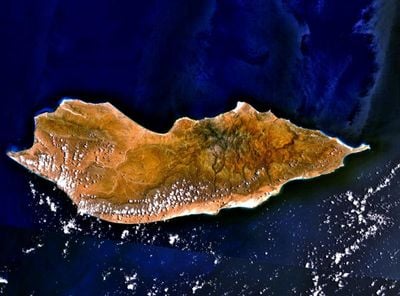
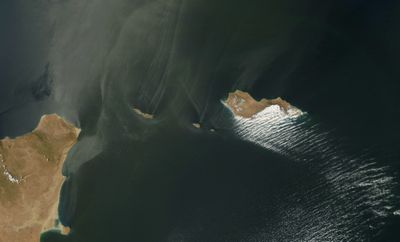
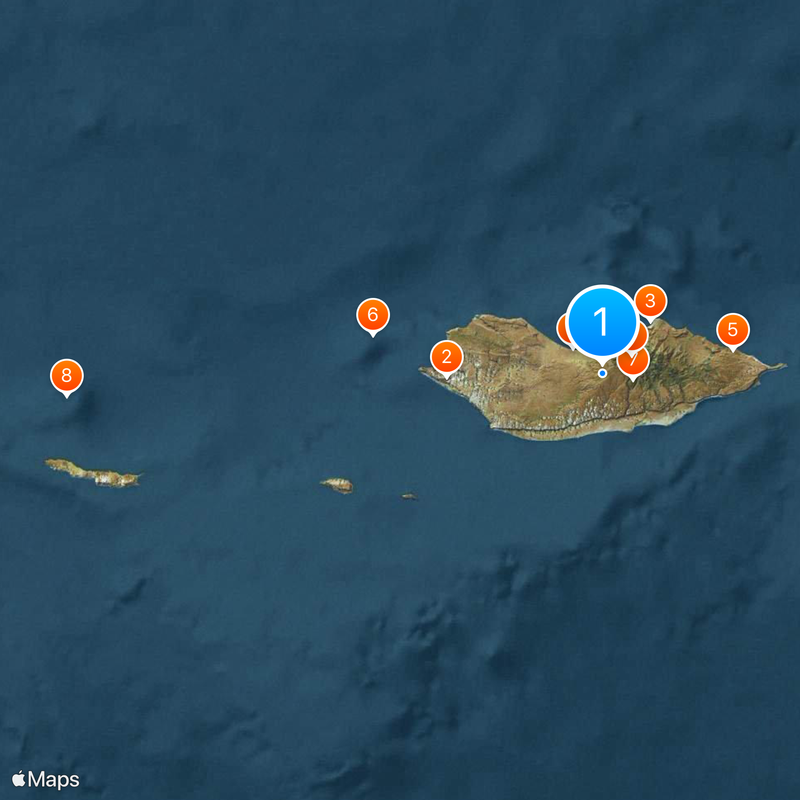
Socotra, UNESCO World Heritage Site island in Arabian Sea, Yemen.

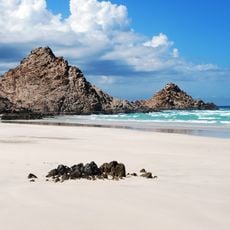
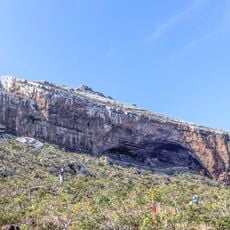
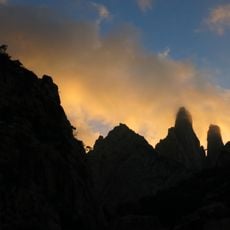
Socotra is an island in the Arabian Sea belonging to Yemen, covering 3,796 square kilometers (1,465 square miles) from coastal plains to limestone peaks reaching 1,503 meters (4,931 feet). The terrain shows dry valleys, steep coastal cliffs, and interior plateaus where rare plants grow among rocks.

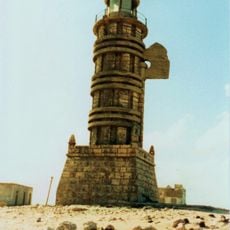
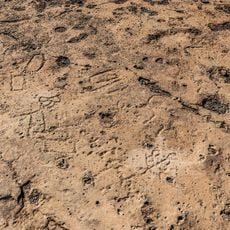
Archaeological findings show the island served as a trading post in the first century CE, mentioned in the Periplus of the Erythraean Sea. A Christian community lived here during medieval times before isolation shaped local culture over centuries.

Residents speak Soqotri, a Semitic language you can still hear in villages and markets. Fishermen use traditional methods passed down through generations, and herders move through the mountains with goats.

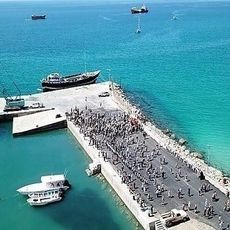
Four-wheel-drive vehicles are necessary to move around the island, as paved roads are absent. Flights arrive from mainland Yemen or neighboring countries, though connections may vary depending on the political situation.

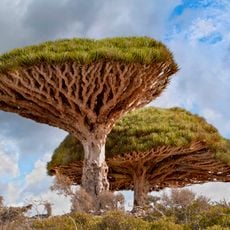
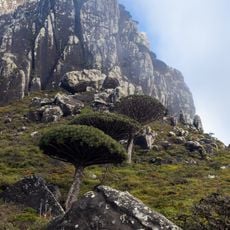
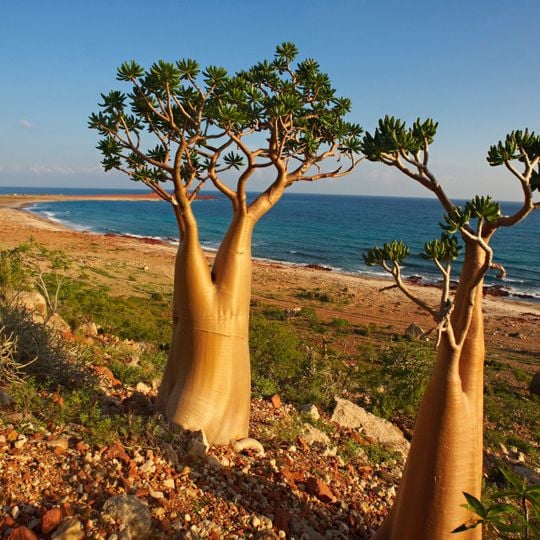
One-third of plant species exist nowhere else on Earth, including the Dragon Blood Tree with its red sap and umbrella-shaped crown. Coastal waters harbor rare fish species and corals that can be observed while snorkeling.

Location: Socotra Archipelago Governorate

Elevation above the sea: 1,503 m

Part of: Socotra Archipelago

Address: Socotra, Yemen

Website: http://socotraisland.org

GPS coordinates: 12.51000,53.92000

Latest update: December 3, 2025 07:22

Photos
Unusual natural wonders and geological formations worldwide

This collection presents extraordinary natural phenomena and geological formations across all continents, from salt flats and volcanic crater fields to underground cave systems and landscapes shaped by mineral deposits. The featured sites display rare geological processes: moving stones leave mysterious tracks across California desert playas, methane gas feeds flames in a Turkmenistan crater for decades, and thermal springs create white travertine terraces in the Turkish countryside. Coral reefs form circular structures off the coast of Belize, while chemical reactions turn lakes pink in Australia and rivers brilliant colors in Colombia. The geological features include hexagonal basalt columns along the Northern Irish coast, conical limestone hills on Philippine islands, and mushroom shaped sandstone formations in Utah. Caves in New Zealand house thousands of bioluminescent larvae, while one of the world's largest caverns lies beneath Vietnamese mountains. Locations range from a geyser studded desert basin in Nevada to red algae carpets along Chinese shores to isolated islands off the Yemeni coast with endemic flora. This collection encompasses both ancient archaeological puzzles like stone jars in Laos and ground drawings in Peru, as well as natural optical illusions such as apparent underwater cascades off Mauritius.

Remote places: deserts, islands, research stations

This collection covers places in remote deserts, isolated islands, and inaccessible mountain regions where human settlement is limited to a minimum. They range from research stations in Antarctica such as McMurdo Station and the Amundsen-Scott South Pole Station to the French Kerguelen Islands in the southern Indian Ocean. The collection includes settlements without road access like the village of Supai deep in the Grand Canyon of Arizona, reachable only on foot, by helicopter, or by mule, as well as Ittoqqortoormiit on the eastern coast of Greenland. Other locations are Easter Island in the Pacific, located over 2300 miles (3700 kilometers) from mainland Chile, and Tristan da Cunha, an inhabited island group in the middle of the South Atlantic. Extreme locations include Alert in Nunavut, Canada, the northernmost permanently inhabited settlement in the world, the Siberian village of Oymyakon with its exceptionally low winter temperatures, and the Yemeni island of Socotra with its peculiar flora. The collection also includes the Siwa Oasis in the Egyptian desert, Motuo County in Tibet, and the Scottish island of Foula.

Photography locations in Yemen

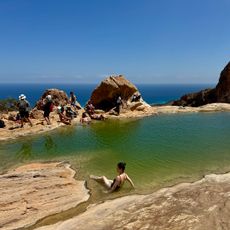
Yemen offers photographers subjects ranging from the ancient mud architecture of Sanaa to volcanic craters and the geological formations of Socotra. The Old City of Sanaa presents multi-story tower houses decorated with white gypsum patterns, while Shibam in Hadhramaut displays mud-brick high-rises dating from the 16th century. The fortress of Kawkaban sits atop a high plateau, the village of Hababah demonstrates traditional mountain architecture, and Shaharah Bridge connects two mountain peaks at an elevation exceeding 8,500 feet (2,600 meters). Socotra features Detwah Lagoon, dragon blood trees and limestone caves within its distinct ecosystem. The crater of Haradha Damt is an extinct volcano near Damt, the Marib Dam represents Sabaean engineering from antiquity, and the ruins of Arsh Balqis mark an ancient temple site. Wadi Dawan cuts through Hadhramaut with palm groves and mud villages, Jabal al-Nabi Shu'ayb reaches 12,028 feet (3,666 meters) as the highest peak on the Arabian Peninsula, and Zabid preserves its role as a historic center of Islamic scholarship. Sira Fortress in Aden occupies a volcanic rock above the harbor, Dar al-Hajar in Wadi Dhahr is an 18th-century palace built on a rock outcrop, and Al Saleh Mosque in Sanaa dates from 2008.

Hidden gems of the Middle Eastern deserts

The deserts of the Middle East contain many places that see few visitors each year. This collection introduces historical sites, natural formations, and cultural landmarks spread across the region's sandy plains and rocky wilderness. From ancient ruins to geological features, these locations show the region's long history and varied landscapes. The places listed here range from northern Saudi Arabian rock formations like Qasr al-Farid to Morocco's colored sand dunes. Oman holds green valleys and underground lakes, while the Emirates and Qatar feature plateaus and coastal shapes. Each location has its own story: some served as trade centers, others as shelters or sacred sites. Visitors to these places encounter landscapes full of contrast. Limestone cliffs meet sand dunes, green oases emerge suddenly from dry land, and coastal areas support their own ecosystems. Those who explore these regions learn not just about nature, but also how people have lived and worked here for many centuries.

The most isolated places in the World

Some places on Earth feel so far removed from the rest of the world that reaching them requires real commitment. This collection brings together research stations in Antarctica, villages in Siberia where winter temperatures drop to brutal lows, communities tucked deep inside canyons, and islands separated from any mainland by thousands of miles of open ocean. Each location shows how people manage to live and work where nature pushes against the limits of human presence. You will find weather stations near the North Pole, remote Greenlandic settlements reachable only by boat or helicopter, and secret military facilities hidden in desert expanses. Some of these places host scientists studying glaciers and wildlife in the southern seas. Others are home to indigenous communities who have adapted their way of life to freezing temperatures and months of darkness. Whether it is a research base on a subantarctic island or a Siberian village that holds the record for the coldest inhabited spot in the Northern Hemisphere, these locations offer a glimpse into how humans establish roots in the most challenging corners of the planet.

Reviews

Visited this place? Tap the stars to rate it and share your experience / photos with the community! Try now! You can cancel it anytime.

« Socotra - UNESCO World Heritage Site island in Arabian Sea, Yemen » is provided by Around Us (aroundus.com). Images and texts are derived from Wikimedia project under a Creative Commons license. You are allowed to copy, distribute, and modify copies of this page, under the conditions set by the license, as long as this note is clearly visible.

Discover hidden gems everywhere you go!

From secret cafés to breathtaking viewpoints, skip the crowded tourist spots and find places that match your style. Our app makes it easy with voice search, smart filtering, route optimization, and insider tips from travelers worldwide. Download now for the complete mobile experience.

Around Us App Screenshot

A unique approach to discovering new places

Le Figaro

All the places worth exploring

France Info

A tailor-made excursion in just a few clicks

20 Minutes